Backyard Sauna & Cold Plunge: How to Set One Up
A backyard sauna-and-plunge combo turns your yard into a contrast-therapy retreat. Here’s how to plan it properly. (See also the home recovery room.)
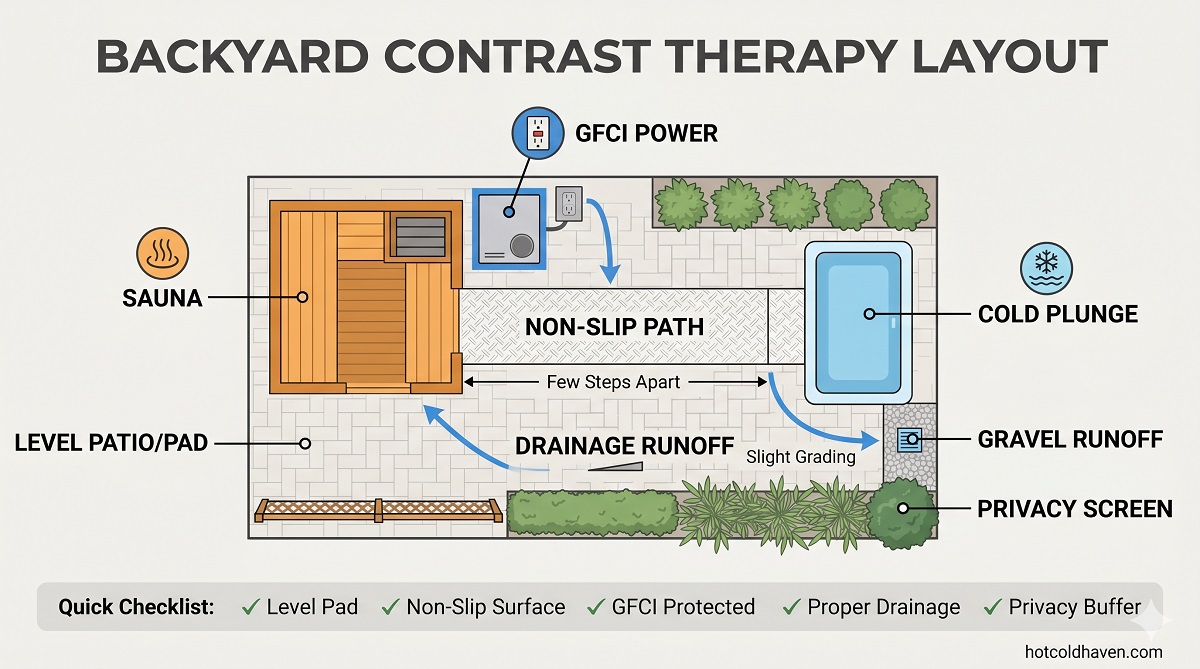
1. A base that can take the weight
Both units are heavy — and a filled plunge plus a bather can top 1,000 lb (water is ~8.3 lb/gallon). Build on a concrete pad or compacted gravel, level and solid. Don’t place a full plunge on soft ground or an unreinforced deck (see placement).
2. Electrical & GFCI
An outdoor traditional sauna needs a 240V circuit; the plunge chiller needs a nearby outlet. All outdoor power must be GFCI-protected and installed by a licensed electrician (see requirements).
3. Drainage
You’ll drain and refill the plunge periodically, so plan where the water goes — a downhill run, a gravel bed, or near a yard drain.
4. Weather & freeze protection
Use outdoor-rated, weather-sealed equipment. In winter, keep the plunge circulating so it can’t freeze, or fully drain it and the lines (see maintenance). Saunas tolerate cold; the plunge’s plumbing is the freeze risk.
5. Layout & privacy
Put the sauna and plunge a few steps apart for easy alternating, with a non-slip path between. Add screening, a fence panel, or planting for privacy — you’ll use the space far more if it feels private and convenient.
Three layouts by yard size
- Small yard / patio: a compact barrel or pod sauna with a portable plunge a step away on a shared paved pad; screen one side for privacy. Keeps the footprint tiny while still allowing easy hot-cold transitions.
- Medium yard: a cabin or barrel sauna on a gravel/paver base with a hard-sided plunge alongside, a short non-slip deck path between, and planting or a fence panel for seclusion.
- Large yard: a dedicated “recovery corner” — sauna, plunge, a bench or cold-rinse shower, and lighting — zoned away from the house with its own GFCI sub-feed and drainage run.
Whatever the size, the rule is the same: keep the sauna and plunge close enough that the transition is effortless, or you simply won’t use them as a pair. See the home recovery room guide for the full layout approach.
FAQ
How do I set up a backyard sauna and cold plunge?
Plan four things: a solid, level base (concrete pad or gravel) that can take the weight, outdoor GFCI-protected power for both, drainage for the plunge, and weather/freeze protection. Place them close together for easy hot-cold transitions, with some privacy screening.
Does a backyard cold plunge need a special foundation?
It needs a solid, level surface that can carry the load — water weighs about 8.3 lb/gallon, so a filled tub plus a person can exceed 1,000 lb. A concrete pad or compacted gravel base works; avoid soft ground or an unreinforced deck.
How do I protect an outdoor sauna and cold plunge in winter?
Use outdoor-rated, weather-sealed equipment, and either keep the plunge water circulating so it can’t freeze or fully drain it and the lines per the maker’s instructions. Saunas handle cold well; the plunge’s plumbing is the freeze risk.
How close should the sauna and cold plunge be?
Close enough for an easy transition — a few steps — so you’ll actually alternate between them. Keep a safe, non-slip path between, and consider privacy screening for the whole zone.
Sources
- PureHeat Saunas — outdoor sauna site prep, pad/gravel, weight & delivery. pureheatsaunas.store
- homesauna.com — outdoor sauna foundation, electrical & weather protection. homesauna.com
Educational only. Codes and conditions vary — confirm locally and consult a licensed professional.