Cold Plunge Electricity Cost
Where the electricity actually goes
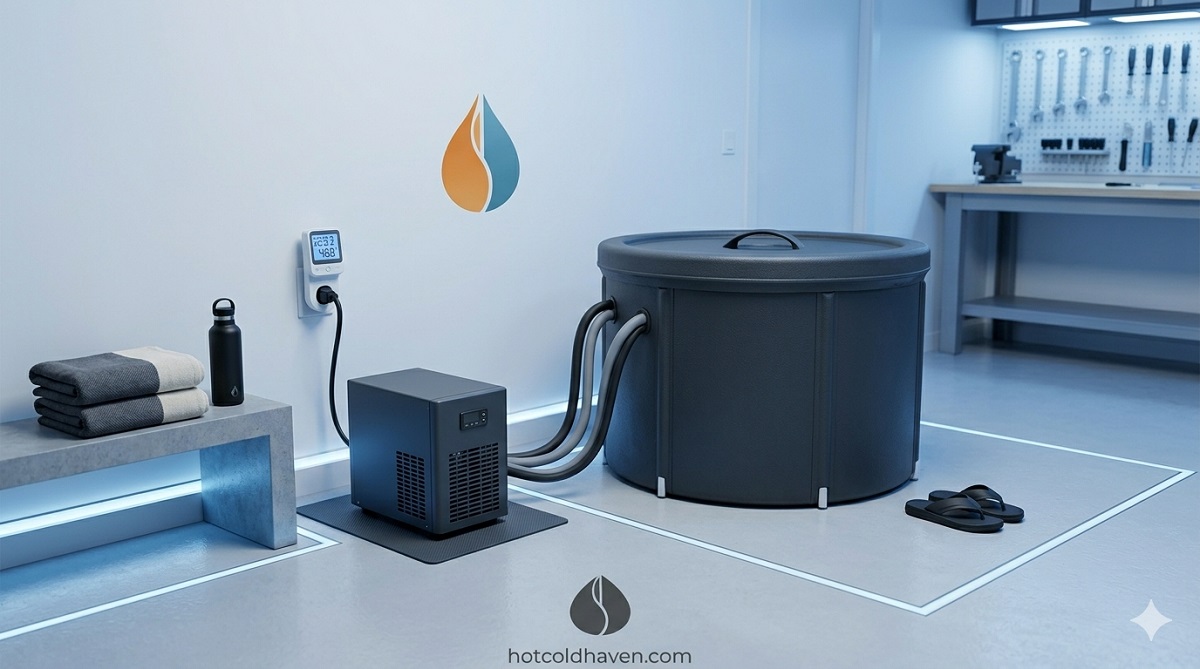
A cold plunge has one meaningful power draw: the chiller, which works like a compact air conditioner or mini-fridge — pulling warm water across a cooling coil and circulating it back. Crucially, it doesn’t run flat-out 24/7. Once it hits your target temperature it cycles on and off to hold it, so its average draw is far lower than its rated wattage. A small circulation pump adds a little continuous draw; everything else (a quick session) is negligible. New to how chillers work? See our chiller guide.
The simple formula
Monthly cost = average watts ÷ 1000 × 24 hrs × 30.4 days × your $/kWh
The trick is the average watts, not the rated watts. A chiller rated at 750 W might only average 150–250 W once the water is cold and the tub is covered. The U.S. average electricity rate is around $0.17 per kWh (it ranges widely by state — check your bill). For reference, the U.S. Department of Energy notes small appliances like mini-freezers typically use 200–500 kWh per year — right where a home cold-plunge chiller lands.
Estimated monthly cost by chiller size
Daily use, an insulated tub with a cover, moderate climate, at ~$0.17/kWh. Treat these as realistic ranges, not guarantees:
| Chiller size | Rated power | Typical monthly cost | Best suited to |
|---|---|---|---|
| 1/4 HP | ~300–400 W | ~$8–$18 | Small, insulated tubs; mild climates |
| 1/2 HP | ~600–750 W | ~$12–$28 | Most home tubs (the sweet spot) |
| 3/4 HP | ~900–1100 W | ~$18–$38 | Larger tubs; warmer regions |
| 1 HP | ~1200–1500 W | ~$20–$45 | Big volumes; hot climates; fast cooldowns |
As a real-world anchor: a 1 HP chiller holding ~200 L at near-freezing for a full day has been measured at about 4.8 kWh/day — roughly $0.70–$0.80, or about $22–$24 a month. Bigger temperature drops, hot ambient air, and an uncovered tub push it up from there.
Our calculator estimates your running cost and 5-year total from your tub, chiller size, climate and electricity rate.
Open the Cold Plunge Cost Calculator →
What drives your bill up or down
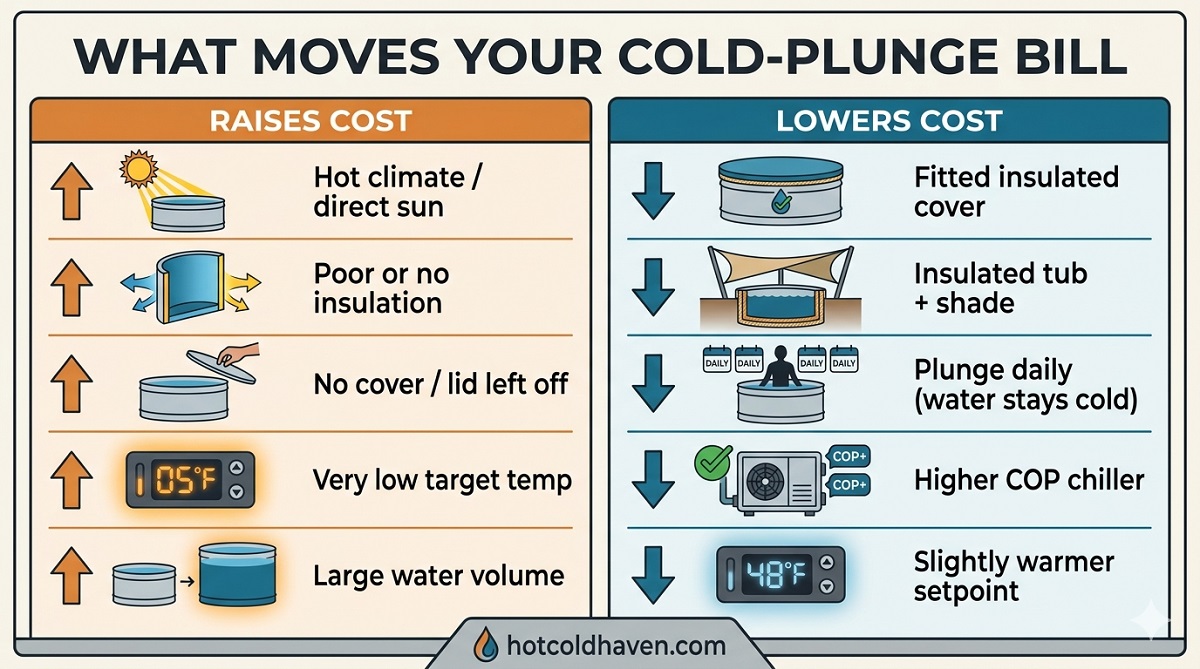
The big variables:
- Insulation & a fitted cover — the number-one lever. A good cover dramatically cuts how often the compressor runs.
- Climate & placement — hot ambient air and direct sun make the chiller work harder; shade and a cool room help.
- Target temperature — every degree colder costs more. Setting 48–50°F instead of 39°F noticeably lowers the bill.
- Water volume — bigger tubs hold more thermal mass to cool and maintain.
- Usage pattern — counterintuitively, plunging regularly can keep costs steady because the water stays cold rather than rewarming between sessions.
- Chiller efficiency (COP) — a higher Coefficient of Performance means more cooling per watt; a COP of 3.0+ is solid.
Chiller electricity vs. buying ice
This is where the running-cost picture flips a common assumption. An ice-based tub is cheap to buy but expensive to feed: at two $4 bags per session, daily plunging runs well over $200 a month in ice — and even three times a week is $50–$100. A chiller’s $10–$45 of electricity looks tiny by comparison. Ice only wins for occasional use; for any regular routine, a chiller is far cheaper to run (and far less hassle). We break down the upfront-vs-running trade-off in the chillers guide and across the best cold plunge tubs.
The DIY chest-freezer route
A converted chest freezer is the cheapest cold to run of all — roughly $45–$65 a year to maintain — because freezers are built to hold cold efficiently. The trade-offs are sanitation, waterproofing and aesthetics rather than electricity. If you’re handy, see our DIY cold plunge guide.
7 ways to cut your running cost
- Use a fitted insulated cover whenever you’re not plunging.
- Keep the tub insulated and out of direct sun (shade or indoors).
- Set a slightly warmer target temperature — 48–50°F is plenty cold for benefits.
- Choose a higher-COP chiller sized correctly for your tub.
- Plunge consistently so the water stays cold instead of rewarming.
- Keep the condenser/coils clean and the water filtered so the chiller breathes.
- Run a plug-in energy meter for a week to know your real number.
FAQ
How much does it cost to run a cold plunge per month?
For most home chillers, roughly $10–$45 a month in electricity with daily use — lower for small, insulated tubs in mild climates, higher for big units, hot climates, or uncovered tubs.
Is it cheaper to run a chiller or buy ice?
For regular use, a chiller is far cheaper. Ice can exceed $200/month for daily plunges, versus $10–$45 of electricity for a chiller. Ice only makes sense for occasional use.
Does leaving the chiller running all the time cost more?
Not necessarily. A chiller holding already-cold, covered water cycles only briefly. Letting water rewarm and then chilling it from scratch each time can actually use more energy.
What uses the most electricity in a cold plunge?
The chiller’s compressor, especially during the initial cool-down and in hot conditions. A small circulation pump adds a little continuous draw.
How can I find my exact cost?
Plug the chiller into an energy meter for a week, or use our cost calculator to estimate from your tub, chiller size, climate and electricity rate.
Sources
- U.S. Department of Energy — Estimating appliance & home electronic energy use. energy.gov
- Peak Primal Wellness — The real cost of a home wellness spa. peakprimalwellness.com
- Measured chiller-consumption data (1 HP / 200 L) as reported by chiller manufacturers. syochi.com
Figures are estimates; your costs vary with chiller, insulation, climate, target temperature and local electricity rates.