Where to Put a Cold Plunge: Placement Guide
Where you put a cold plunge affects safety, running cost and how often you’ll actually use it. Run through these before you commit a spot.
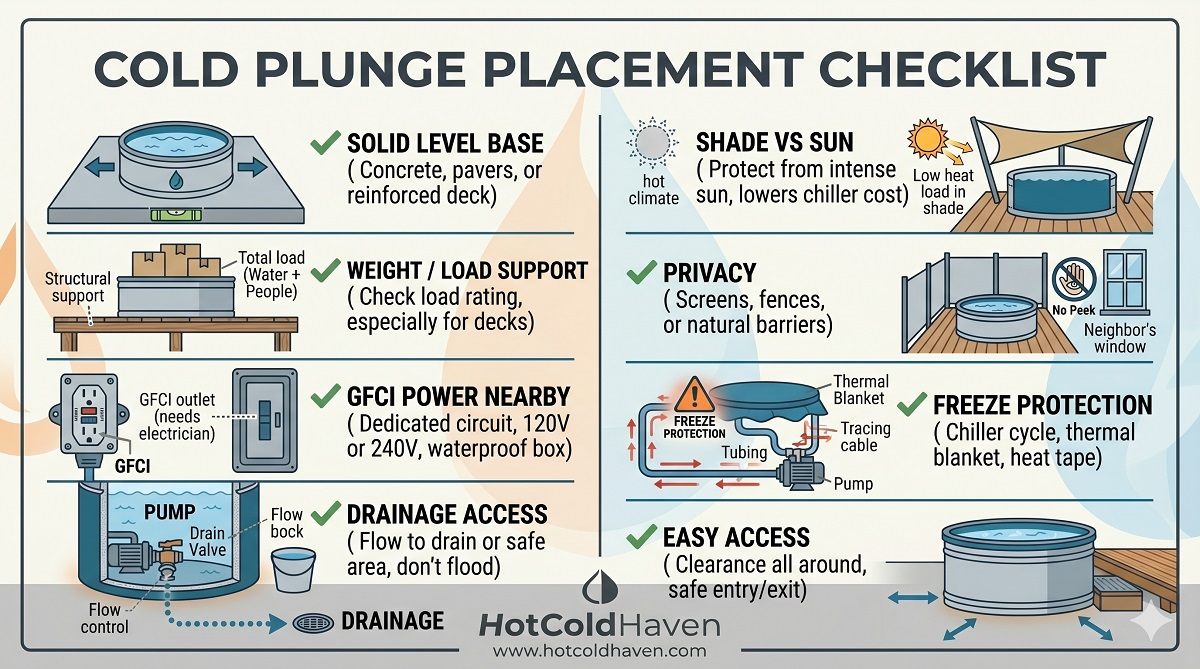
1. A surface that can take the weight
Water is heavy — about 8.3 lb per gallon. A filled 100-gallon plunge plus a bather can top 1,000 lb in a small footprint. You need a solid, level base: a concrete pad, a ground-floor slab, or a deck rated for the load. Don’t place a full tub on an unreinforced balcony or upper-floor deck without a professional’s sign-off.
2. Power & GFCI
A chiller needs a nearby outlet, and any power near water must be GFCI-protected. Plan the spot around safe electrical access rather than running long cords.
3. Drainage
You’ll drain and refill periodically (see maintenance), so pick somewhere water can run off safely — near a yard, a floor drain, or a downhill slope.
4. Sun vs shade (running cost)
Direct sun makes the chiller work harder. A shaded spot or indoor location keeps water cold more efficiently — and a fitted cover compounds the saving (see running costs).
5. Indoor vs outdoor
Indoors (garage, basement, tiled room) gives stable temperatures, lower running cost and year-round use — just ensure a waterproof, well-drained floor and ventilation for humidity. Outdoors offers space and a nicer ritual, but means weather exposure, higher running cost in summer, and freeze protection in winter (keep the pump/chiller circulating or follow the maker’s winterizing steps).
6. Privacy & access
You’ll use it more if it’s convenient and private — near a shower or towel station, with a little screening outdoors. Friction kills consistency.
FAQ
Where is the best place to put a cold plunge?
On a solid, level, water-tolerant surface with nearby GFCI power and easy drainage — a concrete pad, ground-floor room with tile, or a reinforced deck. Shade helps keep running costs down; avoid full sun and unreinforced upper-floor decks.
Can I put a cold plunge on a deck or balcony?
Only if the structure can carry the load. Water weighs about 8.3 lb per gallon, so a filled 100-gallon plunge plus a person can exceed 1,000 lb. Confirm the deck’s load rating with a professional before placing one upstairs.
Can a cold plunge go indoors?
Yes — indoors gives stable temperatures and lower running costs, but you need a waterproof, well-drained floor and good ventilation to manage humidity. Many people use a garage, basement or tiled mudroom.
Does sun exposure affect a cold plunge?
Yes. Direct sun makes the chiller work harder and raises electricity costs. Shade or an indoor spot, plus a fitted insulated cover, keeps the water cold more efficiently.
Sources
- Sun Home Saunas — Cold plunge placement & circulation guidance. sunhomesaunas.com
- Peak Primal Wellness — Home wellness spa setup & running costs. peakprimalwellness.com
Educational only. Codes and conditions vary — confirm locally and consult a licensed professional.