Cold Plunge Buying Guide: How to Choose One Without Overpaying
When you buy through links on HotColdHaven, we may earn a commission — at no extra cost to you. It never influences which products we recommend. Full disclosure.
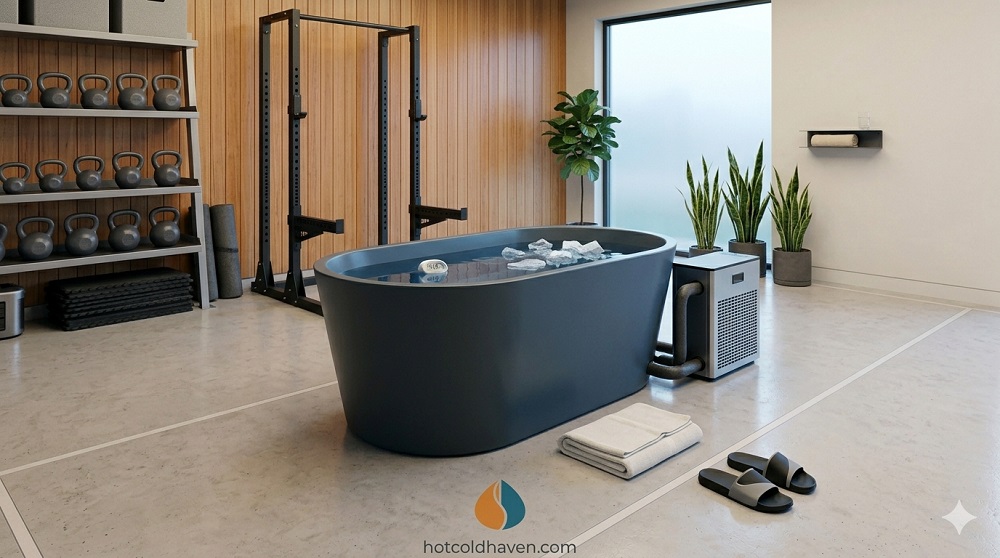
A cold plunge is a tub built to hold water cold enough for deliberate cold-water immersion — usually somewhere between 39°F and 55°F (4–13°C). The question isn’t really whether to get one; it’s whether you need a powered chiller or can start with ice, how much to spend, and which features are worth paying for. This guide walks through every one of those decisions.
The short version: for most people, a hard-shell tub with a built-in chiller and filtration in the $4,000–$7,000 range hits the sweet spot of reliability, low effort, and cold-enough temperatures year-round. But there’s a perfectly good $300 path too — it just costs you in ice and convenience. Here’s how to decide.
Key takeaways
- Chiller or ice? A chiller is the single biggest cost and convenience factor. No chiller = cheaper, but you buy ice constantly.
- Filtration matters more than people think. Ozone/UV + a filter keeps water clean for weeks instead of days.
- Budget the whole system, not just the tub — chiller, electricity, water care and a cover all add up. Run the numbers in our cold plunge cost calculator.
- Colder isn’t automatically better. Most benefits show up at a sensible temperature you’ll actually stick with.
First decision: chiller or just ice?
Every cold plunge comes down to one fork in the road. A powered chiller cools and holds your water at a set temperature automatically, the way an air conditioner cools a room. The alternative is to fill a well-insulated tub and add ice before each session.
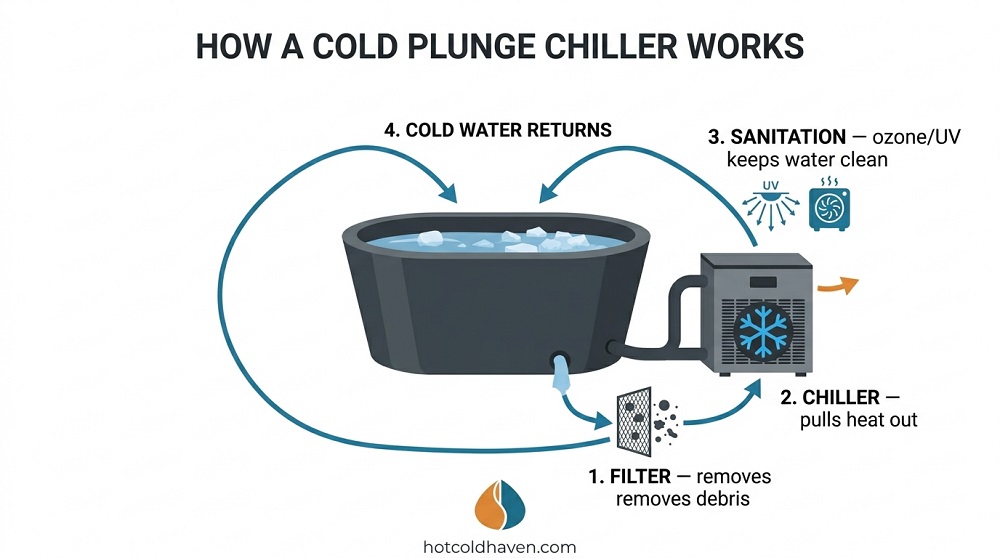
A chiller costs more upfront and adds to your power bill, but it turns cold plunging into a 30-second decision rather than a chore — no ice runs, consistent temperature, and (paired with filtration) water that stays clean for weeks. If you’ll plunge most days, it pays for itself in convenience fast. If you’re testing the habit or plunge occasionally, an insulated tub plus ice is a smart, low-risk start. We break the trade-off down fully in cold plunge vs. ice bath, and explain the cooling tech in how cold plunge chillers work.
The types of cold plunge, ranked by effort
1. Hard-shell tubs with a built-in chiller
The premium, low-effort option and what most serious buyers land on. Insulated acrylic or roto-molded shells with an integrated chiller, filter, and often ozone/UV sanitation. Set a temperature, walk away. This is the category our best cold plunge tubs roundup focuses on.
2. Portable / inflatable tubs
Collapsible or inflatable tubs, sometimes paired with a separate drop-in chiller. Great for renters, small spaces, or travel — lighter on price and footprint, heavier on fiddliness. See our best portable cold plunges for the models worth owning, and inflatable vs. hard-shell cold plunge for the honest pros and cons.
3. Stock tanks and DIY builds
A galvanized stock tank or a chest-freezer conversion can deliver genuinely cold water for a few hundred dollars. The catch is electrical safety, insulation, and sanitation — all on you. If you’re handy, our how to build a DIY cold plunge walks through doing it safely.
4. Stand-alone chillers
If you already have a tub you love, a separate chiller drops in to cool it. Sizing the cooling power to your tub volume and climate is the whole game — covered in our best cold plunge chillers guide.
The 8 things that actually matter when buying
Ignore the marketing and judge any cold plunge on these:
- Cooling power. Can it reach and hold your target temperature in your climate? A chiller that hits 50°F in a cool garage may struggle in a hot one. Match horsepower to tub volume and ambient heat.
- Temperature range & control. Look for precise digital control and a floor in the low 40s°F. More on dialing this in under ideal cold plunge temperature.
- Filtration & sanitation. A 20-micron filter plus ozone or UV-C keeps water clear and safe far longer between changes. This is the difference between weekly water changes and monthly ones.
- Insulation & energy use. Good insulation and a fitted cover slash running costs — the chiller cycles less. Estimate yours with our cold plunge electricity cost breakdown.
- Size & ergonomics. Can you submerge to the shoulders comfortably? Interior depth and seat height matter more than overall footprint.
- Material & durability. Roto-molded and quality acrylic shells outlast soft-sided tubs. Check UV resistance if it lives outdoors.
- Maintenance burden. How easy is it to drain, clean, and service? See cold plunge maintenance.
- Warranty & support. Chillers are the part most likely to fail. A 2–5 year warranty and responsive US support are worth paying for on a four-figure purchase.
How much should you spend?
Cold plunges span a huge range. Roughly:
- $150–$900 — DIY / no chiller. Stock tank or inflatable tub plus ice. Lowest entry cost, highest ongoing effort.
- $3,000–$7,000 — mid-range with chiller. The mainstream sweet spot: integrated chiller, filtration, reliable temps. Most buyers should shop here. Our best cold plunge under $5,000 covers the value end.
- $7,000–$20,000+ — premium. Designer finishes, powerful chillers, smart controls, longer warranties.
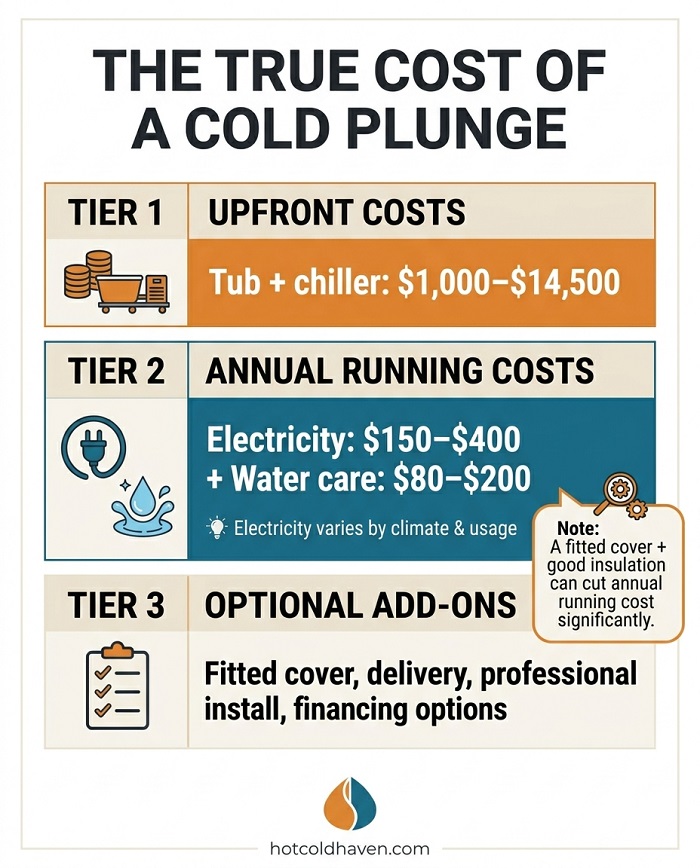
Whatever the sticker, budget the system: tub, chiller, electricity, water care, and a cover. Plug your numbers into the full cold plunge cost breakdown. Spreading the cost? See financing options — and if you have a health account, check whether you qualify under HSA/FSA eligibility, which can effectively discount the purchase.
Ready to see the actual models?
We tested the leading tubs head-to-head and ranked them by value, cooling, and reliability.
Our top picks by category
Rather than crown a single “best,” we match the plunge to the buyer. Here’s where to go next depending on what matters most to you:
| If you want… | Go with | Best for | Full guide |
|---|---|---|---|
| The best overall | Hard-shell + integrated chiller | Daily users who want zero fuss | Best cold plunge tubs |
| The best value | Mid-range chiller tub under $5k | Most buyers | Affordable cold plunge picks |
| Small space / renting | Portable or inflatable tub | Apartments, travel, testing the habit | Best portable cold plunges |
| Already have a tub | Stand-alone chiller | Upgrading a stock tank or existing setup | Best cold plunge chillers |
How cold, and how long?
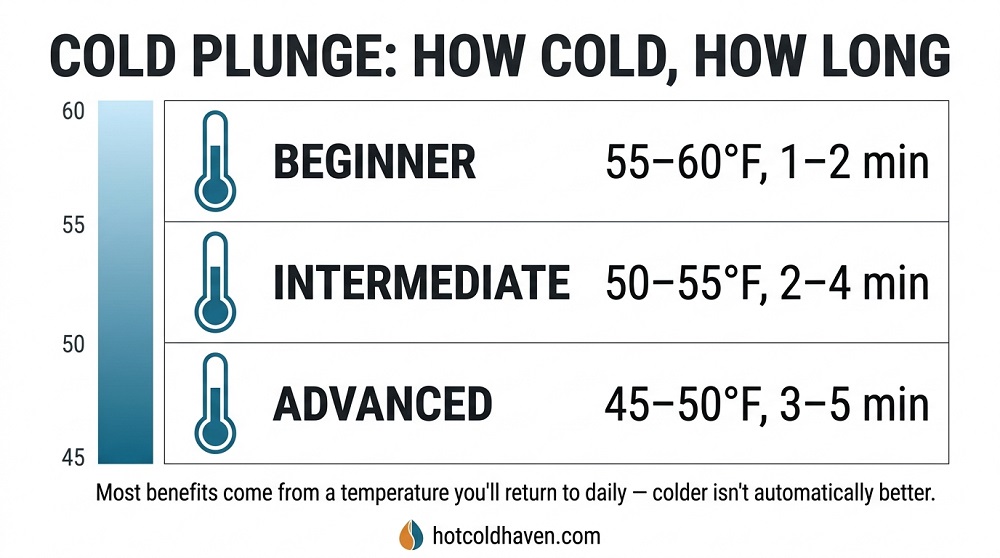
Two questions every new owner asks. Temperature is personal: many people start around 50–55°F and work colder as they adapt. There’s little evidence that punishing cold beats a sustainable temperature you’ll return to daily — what to aim for is in best cold plunge temperature.
Duration is usually short — a few minutes is plenty, and total weekly exposure matters more than any single session. We cover the numbers in how long to cold plunge. New to it entirely? Start with cold plunging for beginners before you buy anything.
Is cold plunging safe for everyone?
For healthy adults, cold-water immersion is generally well tolerated when you ease in. But the cold shock response is real, and it places sudden demand on the cardiovascular system.
Maintenance at a glance
A chiller-and-filter setup is low-effort but not no-effort. Expect to check water chemistry, rinse or swap the filter, and wipe the shell on a simple schedule; without sanitation you’ll change water far more often. The full routine — including water treatment options — is in cold plunge maintenance.
Pairing your plunge with a sauna
Cold plunging is powerful on its own, but many owners build toward contrast therapy — alternating heat and cold. If that’s the goal, read it alongside our complete home sauna buying guide and the science of hot and cold therapy. Planning a dedicated space for both? Start with how to build a home recovery room.
Frequently asked questions
Do I really need a chiller?
No — an insulated tub plus ice works and costs far less upfront. But if you plan to plunge most days, a chiller pays for itself in saved ice, time, and hassle, and keeps the temperature consistent. See cold plunge vs. ice bath.
How cold should the water be?
Most people get results in the 45–55°F range and adjust to preference. Colder isn’t automatically better. Details in ideal cold plunge temperature.
How much does a cold plunge cost to run?
It depends on chiller size, insulation, climate, and your electricity rate. A well-insulated tub with a cover can be modest; estimate yours with our electricity cost guide.
Can I build my own?
Yes. A stock tank or chest-freezer conversion is the cheapest route if you handle insulation and electrical safety correctly. Follow our DIY cold plunge guide.
How often do I change the water?
With ozone/UV plus filtration, weeks. Without it, every few days. Sanitation is the biggest factor — see maintenance.