How to Build a Home Recovery Room
HotColdHaven may earn a commission or referral fee from links and partners on this page, at no cost to you. It never influences our guidance. Full disclosure.
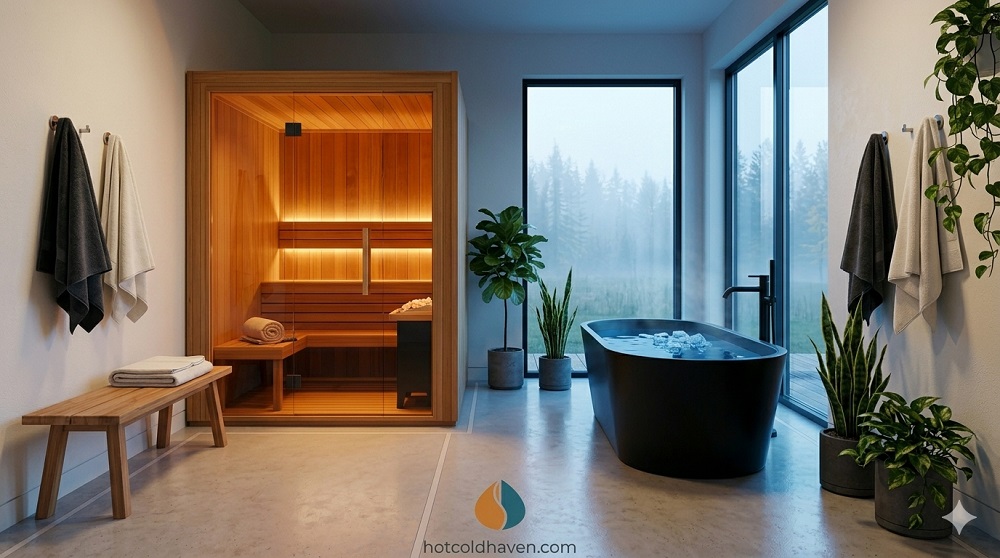
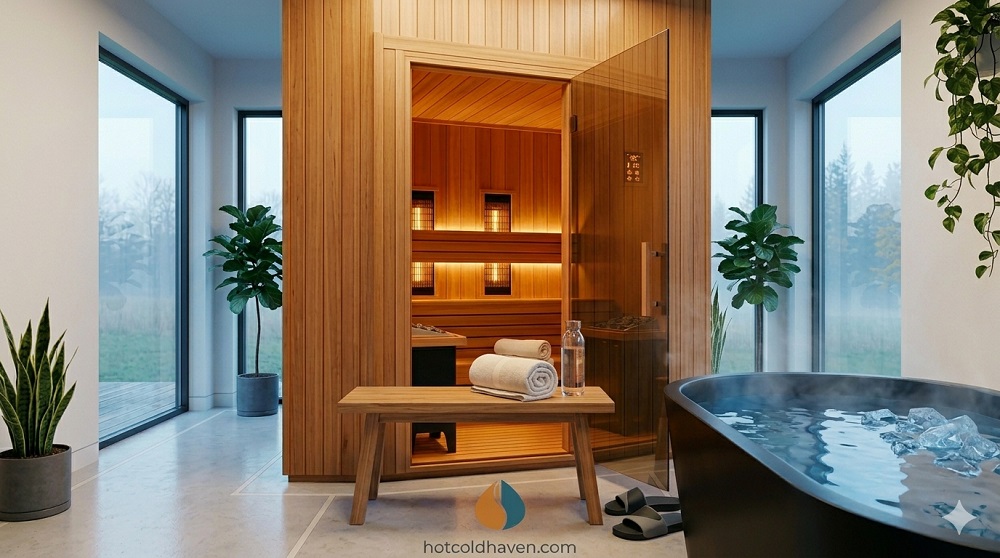
A home recovery room is a dedicated space — indoors or out — built to house a sauna, a cold plunge, or both, with the infrastructure to run them safely and comfortably. Done well, it turns a daily ritual into something effortless. Done without planning, it turns into water damage, tripped breakers, and regret.
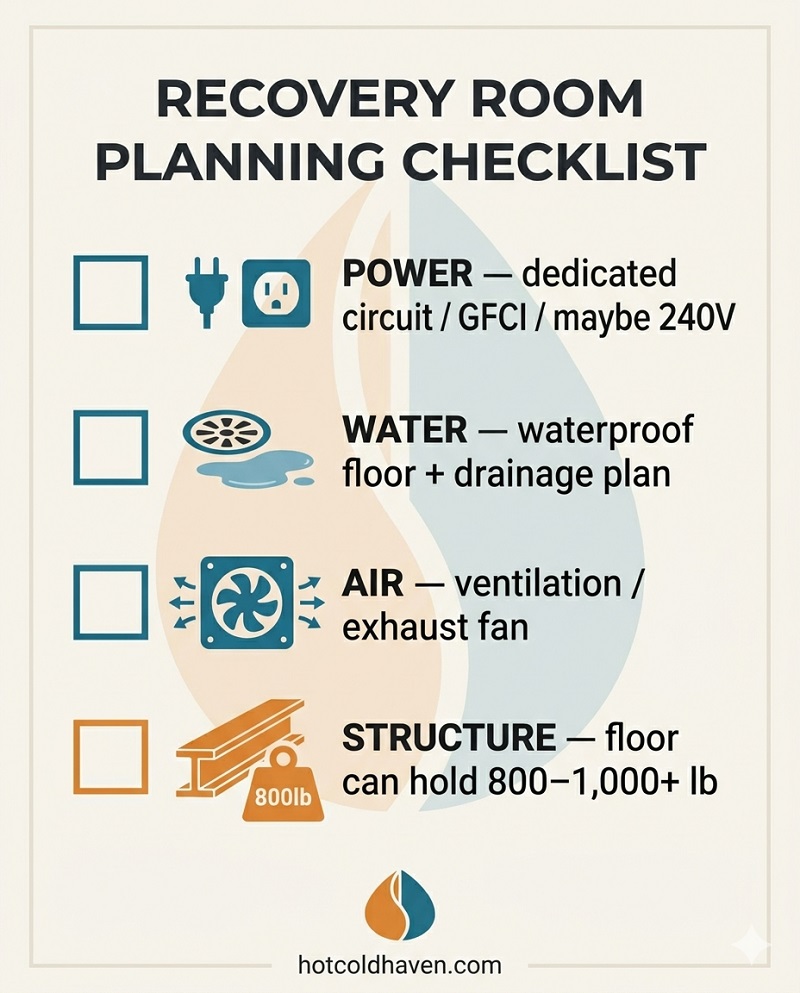
The short version: the equipment is the easy part. The decisions that make or break a recovery room are where it goes, how it’s powered, and how water is managed — power for the chiller and heater, a plan for drainage and humidity, and a floor that can take the weight and the wet. This guide walks through each, and shows you where a professional install is worth it.
Key takeaways
- Plan power first. Saunas and chillers often need dedicated circuits — sometimes 240V. See what a sauna room needs.
- Manage water and humidity. Waterproof flooring, a drain plan, and ventilation prevent the most expensive mistakes.
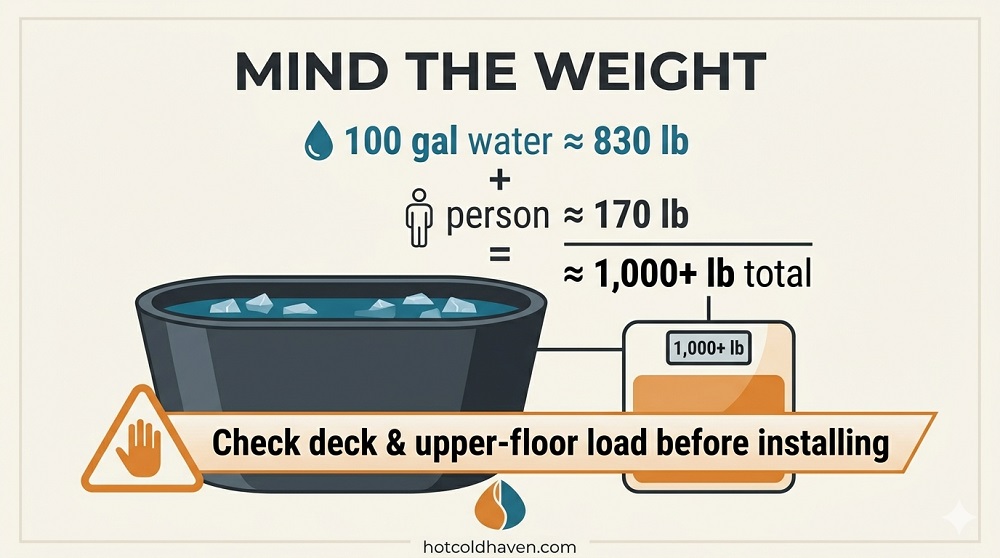
- Mind the weight. A filled cold plunge plus a person can exceed 800–1,000 lb — a real factor for decks and upper floors.
- Know when to hire out. Electrical, plumbing, and structural work are where DIY gets risky. Get matched with a local installer below.
First, decide what goes in it
Most recovery rooms center on a sauna, a cold plunge, or the pair together for contrast therapy. Deciding early shapes everything downstream — a sauna drives your electrical plan, a cold plunge drives your water and drainage plan, and both together need room to move between them. If you’re still weighing the equipment itself, start with our complete cold plunge buying guide and complete home sauna buying guide.
Where to put it
Common indoor homes for a recovery room are a basement, garage, spare room, or large bathroom; outdoors, a patio, reinforced deck, or dedicated structure. Each has trade-offs — basements offer concrete floors and drainage but need ventilation; garages are easy to waterproof but can run hot or cold; outdoor builds free up the house but add weatherproofing and a power run. For the cold-plunge-specific placement decision, see choosing a plunge location, and for outdoor inspiration, backyard sauna and cold plunge ideas.
Electrical & power
This is the most common place DIY plans fall apart. A cold plunge chiller needs GFCI-protected power; a traditional sauna heater (and larger infrared units) often needs a dedicated 240V circuit, sometimes a subpanel and a permit. Running both in one room can exceed what a single circuit allows. Map your loads before you buy anything — the specifics are in electrical and ventilation needs for a sauna, and you can estimate the plunge’s ongoing draw with our cold plunge running costs guide.
Water, drainage & humidity
Anywhere you have a cold plunge or a steam-capable sauna, you have water and humidity to manage. Plan for:
- Waterproof flooring — sealed concrete, tile, or quality vinyl, never bare wood or carpet.
- A drainage plan — a floor drain is ideal; otherwise a pump-out route for periodic plunge water changes.
- Ventilation — an exhaust fan or operable window to clear humidity and protect surrounding walls.
- Water care — keeping plunge water clean reduces how often you drain. See keeping plunge water sanitary.
Weight & structure
Water is heavy — roughly 8.3 lb per gallon. A 100-gallon cold plunge holds over 800 lb of water before you add a person, and saunas add their own load. On a slab this is rarely an issue; on a deck or an upper floor it absolutely can be. Confirm your floor or deck can carry the load, and reinforce if needed before installing.
Get matched with a local installer
Tell us about your space and we’ll connect you with vetted sauna & cold-plunge pros in your area for a free quote.
By submitting, you agree to be contacted by matched installers. We never sell your data.
Budgeting the whole project
Budget in three buckets: equipment (the sauna and/or plunge), infrastructure (electrical, waterproofing, drainage, ventilation, any structural work), and ongoing (electricity and water care). The infrastructure bucket is the one people underestimate.
Two ways to soften the cost: spread it with financing options, and check whether your equipment qualifies under HSA/FSA eligibility — with a letter of medical necessity, some buyers can use pre-tax dollars, effectively discounting the purchase.
Spread the cost
See monthly payment options from financing partners — often with promotional 0% periods.
DIY or hire a pro?
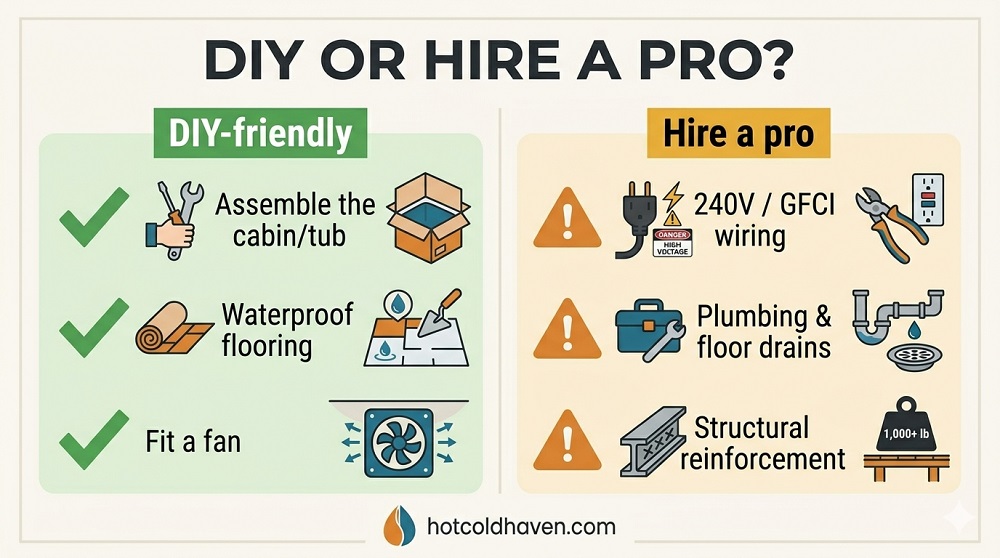
Plenty of a recovery room is genuinely DIY-friendly — assembling a cabin, sealing a floor, fitting a fan. But three areas are where hiring out pays off:
| Task | DIY-friendly? | Why |
|---|---|---|
| Assembling the unit | Usually yes | Most cabins and plunges ship flat-pack with clear instructions. |
| Waterproofing & flooring | Often yes | Manageable with the right materials and care. |
| Dedicated 240V / GFCI wiring | Hire a pro | Shock/fire risk near water; permits usually required. |
| Plumbing & floor drains | Hire a pro | Done wrong, it’s a slow, expensive water-damage problem. |
| Structural reinforcement | Hire a pro | Load-bearing decisions need an expert eye. |
If your build touches any of the “hire a pro” rows, get matched with a local installer for a free quote before you commit.
Choosing the equipment
With the room planned, pick the gear. Our tested roundups will save you the legwork: best cold plunge tubs and best infrared saunas are the place to start, each chosen for reliability and value in a home setting.
Finishing touches
The details make the room feel like a retreat: lighting, seating, towel storage, and the right add-ons. Round things out with must-have recovery accessories and essential sauna accessories. Building one for someone else? Our recovery gift ideas cover smaller pieces too.
Frequently asked questions
Do I need a special room for a sauna and cold plunge?
Not necessarily a custom room, but you do need adequate power, waterproofing, drainage, ventilation, and floor strength. A garage, basement, or reinforced patio often works well with planning.
What’s the most common mistake people make?
Underestimating infrastructure — especially electrical capacity and water/humidity management. The equipment is the easy part; the room around it is what fails when rushed.
Can I put a cold plunge on a deck or upstairs?
Sometimes, but check the load first. A filled plunge plus a person can exceed 800–1,000 lb. Have a pro confirm and reinforce the structure if needed.
How do I find a qualified installer?
Use our free matching form to connect with vetted local sauna and cold-plunge professionals for no-obligation quotes.
Can I finance the project?
Yes — many buyers spread the cost, and some qualify to use HSA/FSA funds. See financing options and HSA/FSA eligibility.