Home Sauna Buying Guide: Infrared vs. Traditional, Sizing & Costs
When you buy through links on HotColdHaven, we may earn a commission — at no extra cost to you. It never influences which products we recommend. Full disclosure.
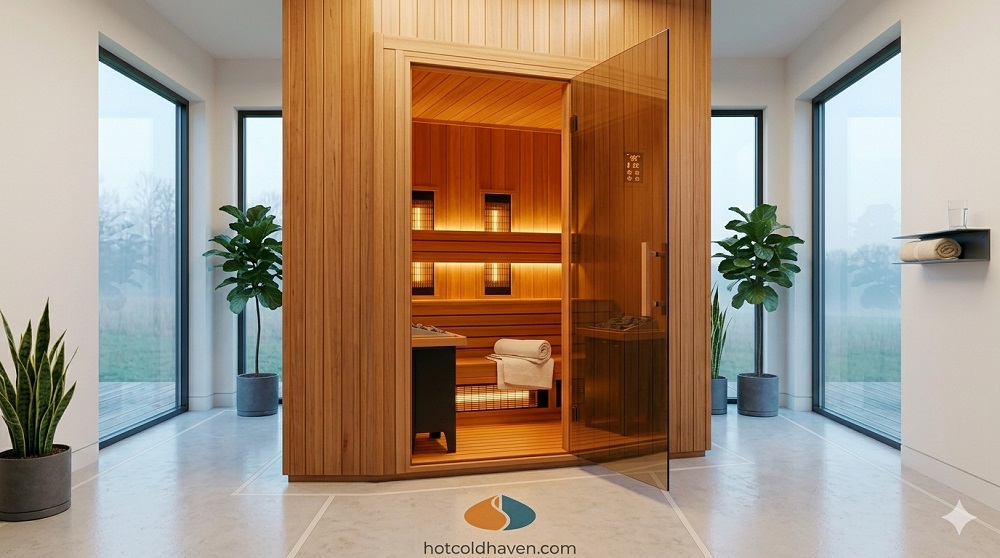
A home sauna is a heated room — or cabin — built to raise your body temperature for relaxation and recovery. The two big families are infrared (radiant panels that warm your body directly at a gentle ambient temperature) and traditional (a heater that warms the air, often with the option to pour water for steam). Almost every buying decision flows from which of those you choose.
The short version: for most buyers, a 1–2 person far-infrared cabin in cedar or hemlock, around $2,000–$4,000, that plugs into a standard outlet is the easiest sauna to own — no special wiring, fast to heat, gentle enough for daily use. If you want the authentic high-heat, steam-and-löyly experience, a traditional electric sauna is the move, but it usually needs a dedicated 240V circuit. Here’s how to decide between them.
Key takeaways
- Infrared vs. traditional is the first and biggest choice — it sets your temperature, electrical needs, and the whole feel. Compared in full under infrared vs. traditional sauna.
- Electrical is the hidden gotcha. Many infrared cabins plug into a normal outlet; most traditional and larger units need a hardwired 240V circuit and often a permit.
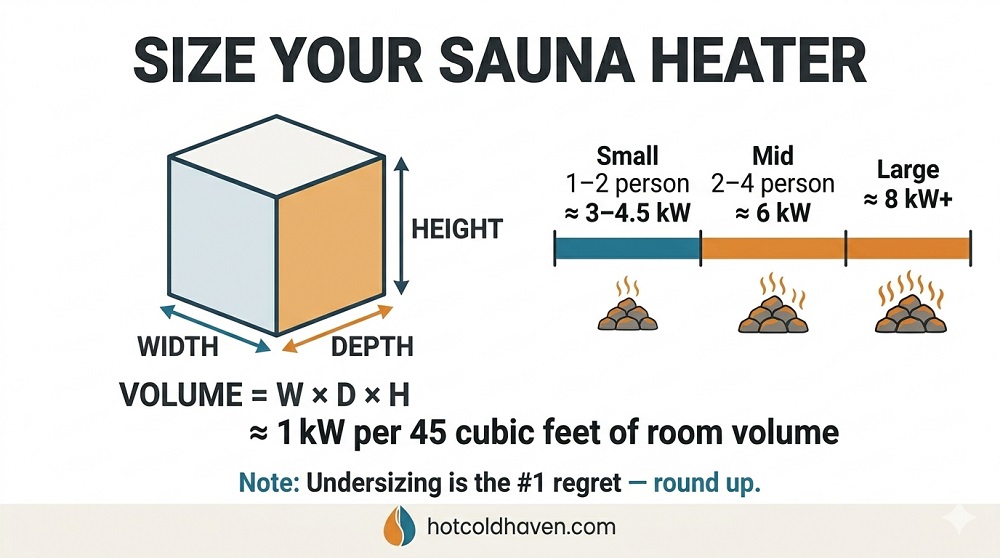
- Size the heater to the room, not the other way around — an undersized heater never gets a traditional sauna hot enough. Use our sauna heater size guide.
- For infrared, check EMF. Reputable brands publish low-EMF readings — see what to know about sauna EMF.
First decision: infrared or traditional?
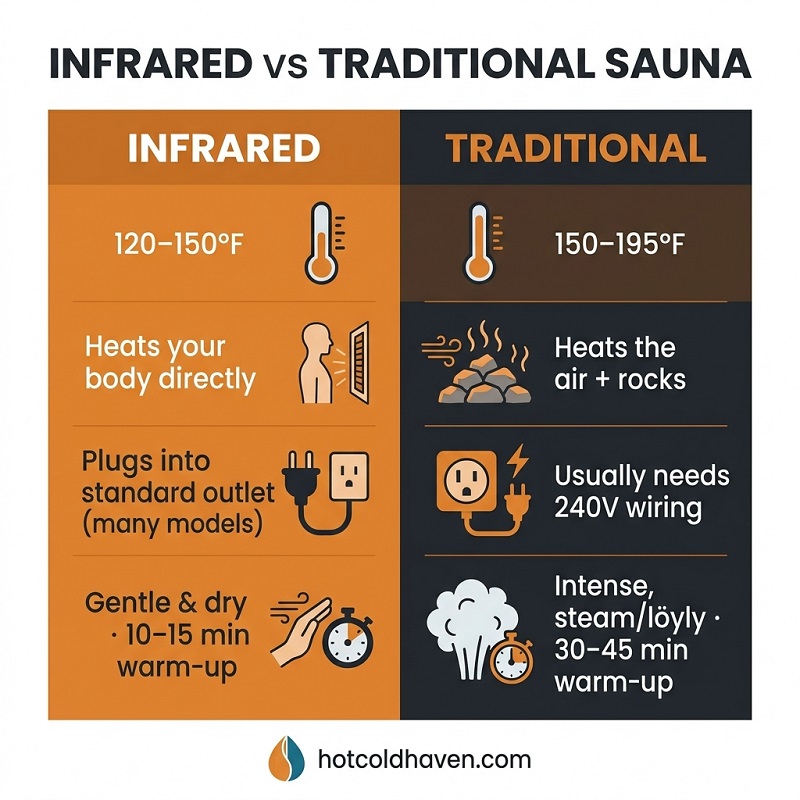
Infrared saunas use panels that emit radiant heat absorbed directly by your body, so the cabin feels comfortable at a lower air temperature — roughly 120–150°F. They heat up in 10–15 minutes, many 1–2 person models run on a standard 120V outlet, and the experience is gentle and dry. Within infrared there’s a further choice between far-infrared only and full-spectrum (near + mid + far), explained in full-spectrum vs. far-infrared sauna.
Traditional (Finnish) saunas heat the air with an electric or wood heater topped with rocks, reaching 150–195°F, and let you pour water over the rocks for a burst of steam (löyly). The experience is more intense and authentic, but they take longer to heat and almost always need a hardwired 240V circuit. The full head-to-head is in which sauna type is right for you.
The types of home sauna
Indoor infrared cabins (1–2 person)
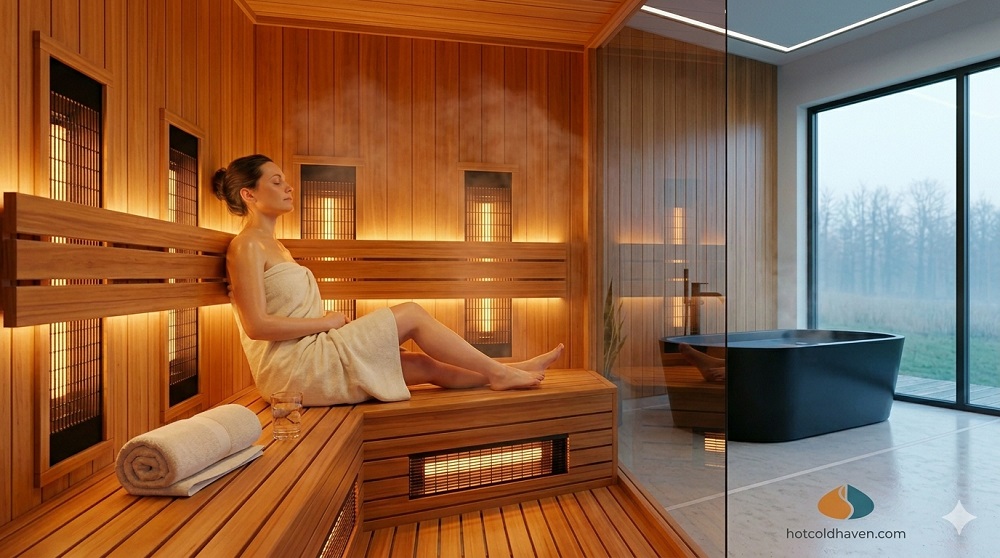
The most popular home category: a freestanding cabin that fits a spare room, basement, or large bathroom. Easy to assemble, low electrical demand, gentle heat. Our best infrared saunas roundup lives here, with a dedicated look at couples-sized units in best 2-person infrared saunas.
Compact saunas for tight spaces
If floor space is the constraint, corner units and slim single-person cabins make a sauna possible almost anywhere. See best saunas for small spaces.
Outdoor & barrel saunas
Outdoor saunas free up indoor space and suit traditional high-heat bathing. Barrel saunas are the iconic outdoor shape — efficient to heat and striking to look at. Browse best outdoor saunas and best barrel saunas.
DIY and custom-cut rooms
Building into an existing room with a cut-to-fit heater and cladding gives the most control for the money — if you’re comfortable with the carpentry and wiring. Start with how to build a DIY sauna.
The 8 things that actually matter when buying
- Heating type. Infrared for gentle, low-power, daily ease; traditional for authentic high heat and steam. This decides almost everything else.
- Heater power (kW) vs. room volume. For traditional saunas, an undersized heater is the #1 regret. Size it with our heater sizing guide.
- Capacity & bench layout. “2-person” varies wildly — check usable bench length and whether you can lie down. Couples should see two-person picks.
- EMF (infrared). Heater and panel design affect electromagnetic field exposure; reputable brands publish third-party readings. Details in infrared sauna EMF safety.
- Wood type. Western red cedar (aromatic, rot-resistant, premium), hemlock and basswood (hypoallergenic, value, good for sensitive users), Nordic spruce for traditional rooms.
- Indoor vs. outdoor. Outdoor units need weather-rated construction and a power run; indoor units need clearance and ventilation.
- Heat-up time & controls. Infrared ~10–15 min; traditional ~30–45 min. Digital controls and a timer add real convenience.
- Build quality & warranty. Heaters and electronics fail first — look for solid joinery and a multi-year warranty with US support.
Electrical & installation
This is where budgets get blown. Many 1–2 person infrared cabins run on a standard 120V outlet — plug in and go. Traditional electric heaters and larger infrared units typically need a dedicated 240V circuit, hardwired by an electrician, sometimes with a permit and dedicated breaker. Outdoor saunas add a weatherproof power run.
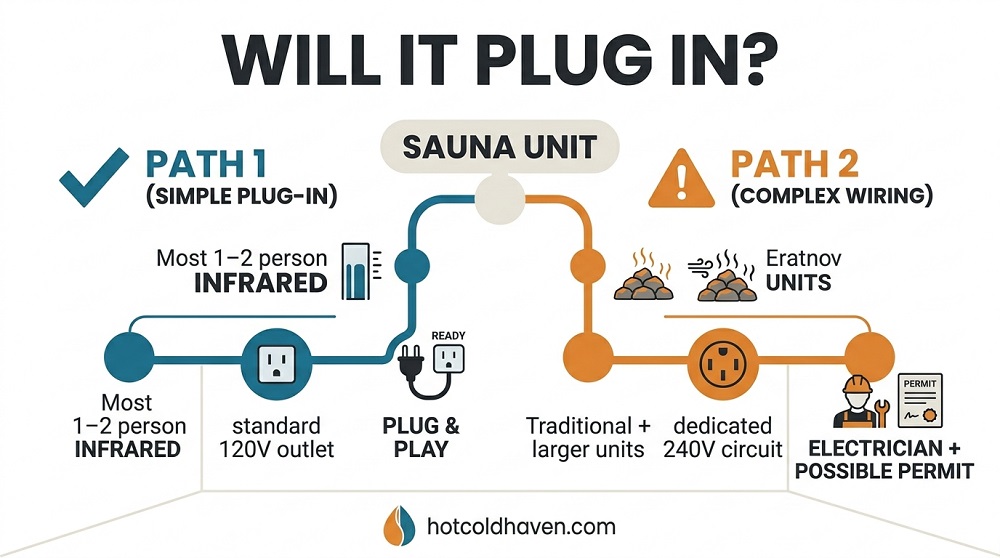
Before you buy, confirm your available power and clearances. Our indoor sauna installation guide walks through placement, ventilation, and wiring, and sauna room requirements covers the electrical and ventilation specifics so nothing surprises you on install day.
How much should you spend?
- $1,500–$4,000 — infrared, 1–2 person. The mainstream sweet spot; many plug-and-play.
- $4,000–$8,000 — premium full-spectrum or larger cabins.
- $3,000–$7,000 — traditional indoor electric. Add electrician costs for 240V.
- $6,000–$15,000+ — outdoor, barrel, and custom-cut rooms.
Budget the install, not just the cabin. The full breakdown — including running costs and hidden extras — is in what a sauna really costs, and if you’re spreading payments, see financing options.
Ready to see the actual saunas?
We tested the leading infrared cabins on heat, EMF, build quality and value.
Our top picks by category
The right sauna depends on space, budget, and where it’ll live. Here’s where to go next:
| If you want… | Go with | Best for | Full guide |
|---|---|---|---|
| The best overall | Far-infrared indoor cabin | Easy daily use, no special wiring | Best infrared saunas |
| A sauna for two | 2-person infrared cabin | Couples and shared sessions | Top two-person infrared saunas |
| An outdoor sauna | Weather-rated outdoor cabin | Freeing up indoor space | Best outdoor saunas |
| The classic look | Barrel sauna | Authentic outdoor bathing | Best barrel saunas |
| To fit a tight spot | Corner / single-person cabin | Apartments and small rooms | Compact sauna picks |
How hot, and how often?
Temperature depends on type: infrared sits around 120–150°F, traditional 150–195°F. What matters more is a setting and session length you’ll keep coming back to — the specifics are in our sauna temperature and time guide.
As for frequency, regular sessions tend to matter more than marathon ones. We lay out sensible cadences in how often to use a sauna. Round out your setup with the right extras in best sauna accessories and upgrades.
Is sauna use safe for everyone?
For most healthy adults, sauna bathing is well tolerated with sensible time limits and hydration. But heat is a genuine cardiovascular load.
Pairing your sauna with a cold plunge
Heat is even more rewarding when paired with cold. If you’re building toward contrast therapy, read this next to our complete cold plunge buying guide and the science of hot and cold therapy. Designing a space for both? Begin with how to build a home recovery room.
Frequently asked questions
Is an infrared or traditional sauna better?
Neither is universally better. Infrared is gentler, lower-power, and easier to install; traditional gets hotter and offers steam. Pick based on the experience you want and your electrical situation. See the full comparison.
Do I need special wiring?
Many 1–2 person infrared saunas plug into a standard outlet. Traditional and larger units usually need a dedicated 240V circuit installed by an electrician. Confirm before buying — see sauna room requirements.
What size heater do I need?
For traditional saunas, heater power is matched to room volume. Undersizing is the most common mistake. Calculate it with our heater size guide.
Should I worry about EMF in infrared saunas?
It depends on the heater and panel design. Reputable brands publish third-party low-EMF readings — what to look for is in our EMF guide.
Which wood is best?
Western red cedar is the aromatic premium choice; hemlock and basswood are budget-friendly and hypoallergenic. All work well — it’s about scent, budget, and sensitivity.