Sauna vs Cold Plunge: Which Should You Buy First?
If you’re building a home recovery setup but can only start with one, this is the decision. Here’s how to choose based on goals, budget and space — and why “both, eventually” is a perfectly good plan. (For the order to use them once you have both, see sauna or cold plunge first?)
What each does best
A sauna excels at relaxation, easing muscle tension, improving circulation, and — per the (mostly traditional-sauna) research — is associated with meaningful cardiovascular and longevity benefits when used regularly (see sauna benefits). It’s the more soothing, wind-down experience.
A cold plunge excels at a fast, lasting mood and alertness lift, reducing perceived soreness, and building resilience (see cold plunge benefits). It’s the more invigorating, wake-up experience.
Cost, space & practicality
Both span a wide price range, so cost alone rarely decides it:
- Budget entry: a portable cold plunge/ice tub or a sauna blanket both start cheap.
- Mid-range: chiller-equipped plunges and infrared cabins overlap around $3,000–$10,000 (see plunge cost and sauna cost).
- Space: a plunge needs a solid, level, drainable spot; a sauna needs a permanent footprint (and a traditional one needs 240V).
- Climate: a sauna shines in cold climates; a plunge is easiest where keeping water cold isn’t a constant fight.
Decide by goal
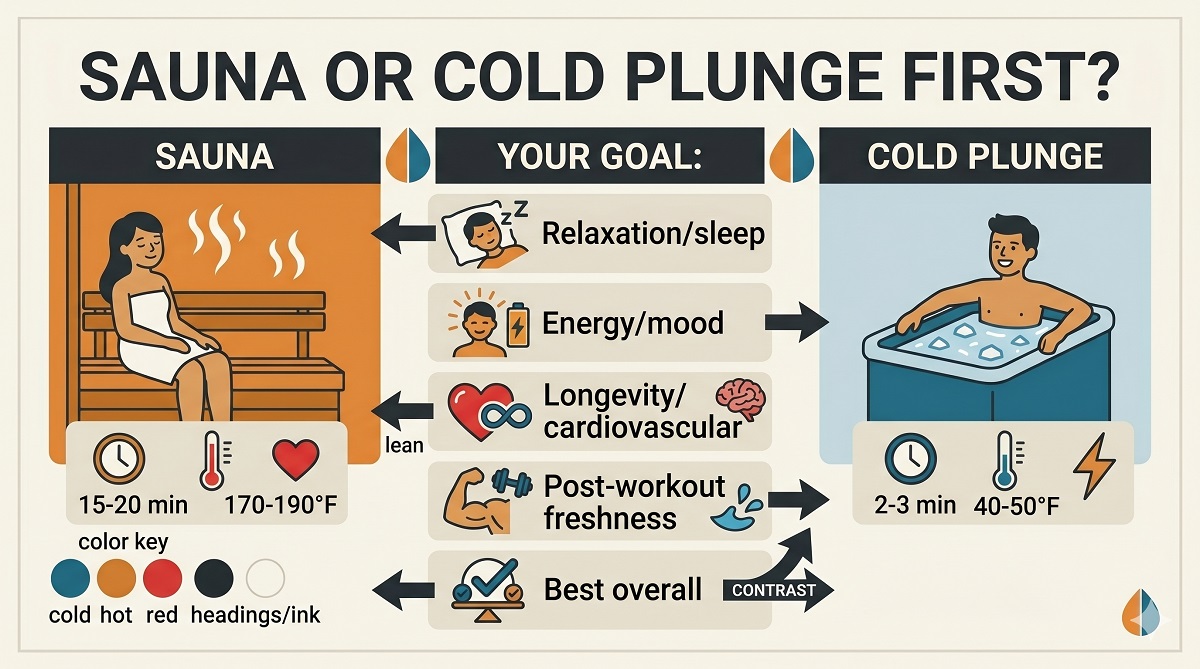
- Relaxation & sleep: sauna (finish warm — see sauna for sleep).
- Energy, focus & mood: cold plunge.
- Longevity & cardiovascular: sauna has the stronger research lean.
- Post-workout (and you do endurance): cold plunge; for strength/size, lean sauna or keep cold away from lifting.
- Tight budget/space: a sauna blanket or a portable plunge to start.
The case for both
Here’s the honest truth from most people who own both: the combination is the real payoff. Alternating heat and cold — contrast therapy — lets you finish cold for energy or warm for sleep, and many find it more satisfying than either alone. You don’t need both on day one; buy the one matching your top goal now, and add the other when budget allows. If you’re leaning that way already, our Protocol Builder and home recovery room guide will help you plan the full setup.
The benefits, head to head
| Goal | Sauna (heat) | Cold plunge |
|---|---|---|
| Mood & energy | Relaxing, calming | Strong, lasting lift |
| Recovery / soreness | Eases tension, circulation | Reduces perceived soreness |
| Sleep | Supports wind-down (finish warm) | Alerting — avoid late |
| Cardiovascular / longevity | Stronger research lean | Promising, less proven |
| Strength training | Safe recovery option | Avoid heavy cold right after lifting |
| Evidence strength | Larger (mostly traditional) | Growing, earlier-stage |
Both are associations and educational, not medical promises — but the pattern is clear: heat leans relaxation and long-term cardiovascular; cold leans mood, alertness and acute recovery.
Budget scenarios
- ~$500: a sauna blanket or a portable/ice plunge — pick by goal; both are great low-risk entries.
- ~$3,000: a solid chiller cold plunge or a quality infrared cabin — again, choose the one matching your top priority.
- ~$10,000+: you can sensibly do both and build a proper recovery room for full contrast therapy.
Space & install realities
A cold plunge needs a solid, level, drainable spot and a GFCI outlet; a traditional sauna needs a permanent footprint and a 240V circuit, while many infrared saunas and all blankets are far simpler. If you rent or are short on space, a blanket or portable plunge sidesteps most of these constraints — worth weighing alongside your goal.
If you can only ever have one
Be honest about what you’ll use. Choose a sauna if you gravitate to warmth, wind-down and the strongest longevity research, or live somewhere cold. Choose a cold plunge if you want the morning mood-and-energy jolt, train hard and recover often, or simply find the cold habit more motivating. The “best” one is the one you’ll actually use most days.
Building toward both
Most people don’t buy both at once — they start with the one that fits their top goal and budget, live with it a few months, then add the other to unlock contrast therapy. If that’s your likely path, leave physical space and an electrical plan for the second unit now, so adding it later is easy. Our Protocol Builder will then help you dial in the routine.
Maintenance & effort compared
One practical factor tips many decisions: a cold plunge needs ongoing water care — filtration, sanitizer, occasional refills — plus a chiller to keep it cold, whereas a sauna is nearly maintenance-free (wipe it down and go). If low-hassle ownership matters, that’s a point for the sauna. If you don’t mind a few minutes of water care a week for the mood payoff, the plunge is no burden.
Climate matters more than people expect
Where you live quietly shapes the right choice. In a cold climate, a sauna is a year-round joy and a cold plunge is cheap to keep cold (sometimes too cold). In a hot climate, a chiller works harder and costs more to run, while a summer sauna is a tougher sell. Not decisive — but factor your weather and where the unit will live (garage, patio, indoors) into the call.
What owners often wish they’d known
- The habit, not the hardware, delivers the benefits — buy what you’ll use daily.
- Leave space and an outlet for the second unit; most people add it eventually.
- Right-size — a smaller sauna or plunge you actually use beats a bigger one you don’t.
- For strength training, keep heavy cold away from lifting sessions.
The bottom line
There’s no universal winner — only the right first buy for your goal. Lean sauna for relaxation, sleep, warmth and the strongest longevity research, or if you live somewhere cold and want low-maintenance ownership. Lean cold plunge for a sharp mood-and-energy lift, post-workout freshness and the resilience habit, if you don’t mind a little water care. Cost rarely decides it because both span budget-to-premium; goal, climate, space and how you’ll actually use it matter more. And remember the answer most owners land on: start with one, then add the other for contrast therapy, which is where the real magic is. Buy the one you’ll use most days first, leave room to grow into both, and you can’t go far wrong.
A quick recap
If you remember nothing else: buy for the goal you have today, the budget you have today, and the space you have today — then pick the unit you’ll genuinely use most often. Sauna for calm, warmth, sleep and long-term cardiovascular benefits; cold plunge for energy, mood and acute recovery. Whichever you choose first, plan for the other later, because contrast therapy — alternating hot and cold — is where most people find the experience pays off the most. The worst choice is the expensive one you stop using, so let realism, not hype, lead the decision.
FAQ
Should I buy a sauna or a cold plunge first?
Pick the one that matches your main goal: a sauna for relaxation, warmth and the strongest longevity research; a cold plunge for a mood and energy lift and post-workout freshness. If budget allows, many people find the combination (contrast therapy) most rewarding.
Is a sauna or cold plunge better for recovery?
Both help. Cold reduces perceived soreness and is great for feeling fresh; heat relaxes muscles and aids circulation. For building strength, avoid heavy cold right after lifting — heat is the safer recovery choice then.
Which is cheaper, a sauna or a cold plunge?
It varies by type. A budget cold plunge (ice tub) or a sauna blanket can both start cheap; mid-range chiller plunges and infrared cabins land in similar territory ($3,000–$10,000). Compare with our cost guides.
Can I use a sauna and cold plunge together?
Yes — alternating heat and cold (contrast therapy) is popular and many find it the best of both. Start in the sauna, finish cold for energy or warm for sleep.
Sources
- Laukkanen et al. (2015), JAMA Internal Medicine — sauna use & cardiovascular/all-cause mortality. doi:10.1001/jamainternmed.2014.8187
- Bieuzen, Bleakley & Costello (2013), PLoS ONE — cold/contrast water therapy & recovery. doi:10.1371/journal.pone.0062356
Educational only. Codes and conditions vary — confirm locally and consult a licensed professional.