What It Costs to Run a Cold Plunge at Home (2026): State-by-State Data
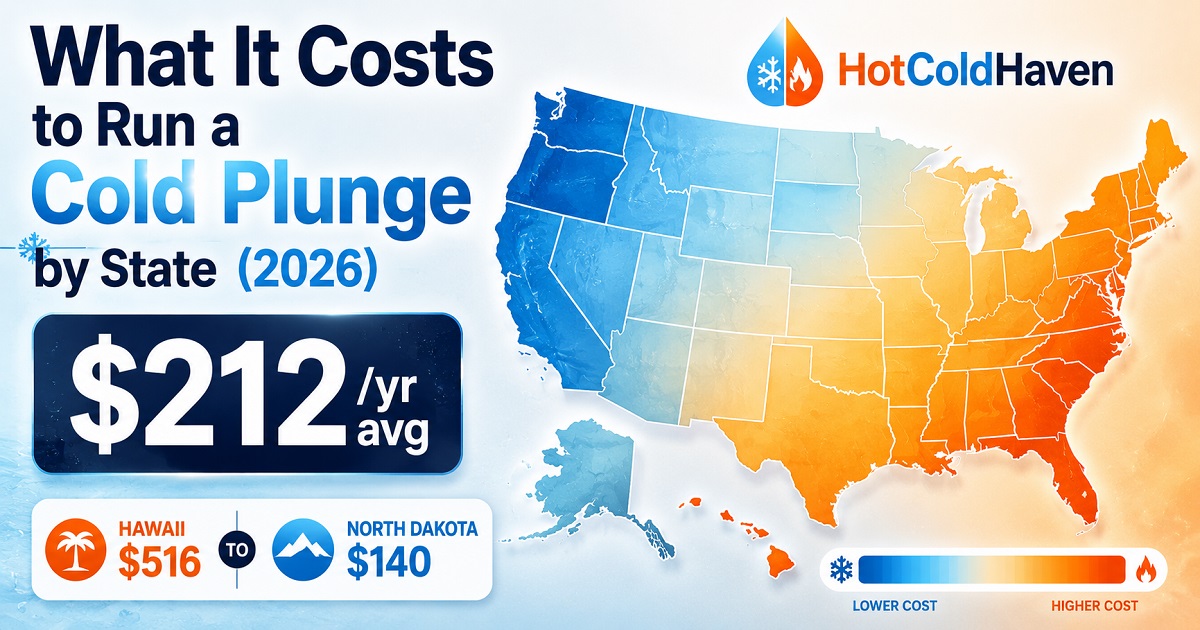
Cold plunges are everywhere — but what do they actually cost to run all year? We applied a transparent energy model to 2026 electricity rates in all 50 states and D.C. The short answer: about $212 a year on average, but it ranges from $140 in North Dakota to $516 in Hawaii — a nearly 4x gap driven by local power prices.
The 10 most — and least — expensive states
Most expensive to run
Cheapest to run
Hawaii tops the list because it relies on imported fuel for power; high-rate New England states (Maine, Connecticut, Massachusetts, Rhode Island), New York and California round out the priciest. The cheapest states cluster where hydro, gas and coal keep wholesale power low — the Dakotas, the Mountain West and parts of the South.
Full data: all 50 states + D.C.
Search for your state or click any column to sort. Cost shown for a baseline daily-use plunge; “per plunge” assumes a plunge a day.
| State | Rate (¢/kWh) | Cost / year | / month | / plunge |
|---|---|---|---|---|
| Alabama | 16.18¢ | $194 | $16.18 | $0.53 |
| Alaska | 25.79¢ | $309 | $25.79 | $0.85 |
| Arizona | 16.03¢ | $192 | $16.03 | $0.53 |
| Arkansas | 12.73¢ | $153 | $12.73 | $0.42 |
| California | 33.22¢ | $399 | $33.22 | $1.09 |
| Colorado | 16.79¢ | $201 | $16.79 | $0.55 |
| Connecticut | 30.77¢ | $369 | $30.77 | $1.01 |
| Delaware | 16.27¢ | $195 | $16.27 | $0.53 |
| District of Columbia | 23.97¢ | $288 | $23.97 | $0.79 |
| Florida | 15.80¢ | $190 | $15.80 | $0.52 |
| Georgia | 14.13¢ | $170 | $14.13 | $0.46 |
| Hawaii | 43.00¢ | $516 | $43.00 | $1.41 |
| Idaho | 12.63¢ | $152 | $12.63 | $0.42 |
| Illinois | 17.83¢ | $214 | $17.83 | $0.59 |
| Indiana | 16.06¢ | $193 | $16.06 | $0.53 |
| Iowa | 12.74¢ | $153 | $12.74 | $0.42 |
| Kansas | 15.11¢ | $181 | $15.11 | $0.50 |
| Kentucky | 13.42¢ | $161 | $13.42 | $0.44 |
| Louisiana | 12.87¢ | $154 | $12.87 | $0.42 |
| Maine | 32.17¢ | $386 | $32.17 | $1.06 |
| Maryland | 20.08¢ | $241 | $20.08 | $0.66 |
| Massachusetts | 30.46¢ | $366 | $30.46 | $1.00 |
| Michigan | 20.00¢ | $240 | $20.00 | $0.66 |
| Minnesota | 15.39¢ | $185 | $15.39 | $0.51 |
| Mississippi | 14.72¢ | $177 | $14.72 | $0.48 |
| Missouri | 12.17¢ | $146 | $12.17 | $0.40 |
| Montana | 13.33¢ | $160 | $13.33 | $0.44 |
| Nebraska | 11.79¢ | $141 | $11.79 | $0.39 |
| Nevada | 14.38¢ | $173 | $14.38 | $0.47 |
| New Hampshire | 26.52¢ | $318 | $26.52 | $0.87 |
| New Jersey | 23.12¢ | $277 | $23.12 | $0.76 |
| New Mexico | 15.07¢ | $181 | $15.07 | $0.50 |
| New York | 29.99¢ | $360 | $29.99 | $0.99 |
| North Carolina | 14.64¢ | $176 | $14.64 | $0.48 |
| North Dakota | 11.64¢ | $140 | $11.64 | $0.38 |
| Ohio | 17.52¢ | $210 | $17.52 | $0.58 |
| Oklahoma | 12.89¢ | $155 | $12.89 | $0.42 |
| Oregon | 14.64¢ | $176 | $14.64 | $0.48 |
| Pennsylvania | 20.30¢ | $244 | $20.30 | $0.67 |
| Rhode Island | 29.45¢ | $353 | $29.45 | $0.97 |
| South Carolina | 16.15¢ | $194 | $16.15 | $0.53 |
| South Dakota | 13.24¢ | $159 | $13.24 | $0.44 |
| Tennessee | 12.82¢ | $154 | $12.82 | $0.42 |
| Texas | 15.41¢ | $185 | $15.41 | $0.51 |
| Utah | 13.33¢ | $160 | $13.33 | $0.44 |
| Vermont | 23.27¢ | $279 | $23.27 | $0.77 |
| Virginia | 15.96¢ | $192 | $15.96 | $0.52 |
| Washington | 14.11¢ | $169 | $14.11 | $0.46 |
| West Virginia | 14.41¢ | $173 | $14.41 | $0.47 |
| Wisconsin | 18.74¢ | $225 | $18.74 | $0.62 |
| Wyoming | 13.04¢ | $156 | $13.04 | $0.43 |
National average residential rate: 17.65¢/kWh (EIA, 2026). Costs assume a 1,200-kWh/year model.
Cold plunge vs. ice vs. studio: what’s actually cheaper?
Vs. buying ice. Keeping an ice bath cold without a chiller means buying ice daily — roughly $2–$5 a day, or about $1,000–$1,800 a year. A chiller’s electricity (about $212/year nationally) is a fraction of that, so a ~$1,500 chiller typically pays for itself in about 12–20 months for daily users — faster if you’d otherwise buy a lot of ice.
Vs. a studio. Cold-plunge studio sessions run $40–$75 each. At home, a daily plunge costs roughly $0.58 per dip nationally — less than a dollar in most states. Two studio visits a month would cost more per year than running your own plunge for that whole year.
See the full buy-vs-run breakdown in our cold plunge cost guide and electricity cost explainer.
What this means if you’re buying
Running cost is real but rarely a dealbreaker: in most states a home cold plunge costs less than a daily coffee to run, and far less than ice or studio sessions. The bigger swing is where you live — in a high-rate state, prioritize a well-insulated tub and a tight-fitting cover, which cut chiller runtime more than any other factor. If you’re still deciding whether it’s worth it, start with our honest take on whether cold plunges are worth it, then compare the best cold plunge tubs and read the chiller guide to keep running costs down.
Frequently asked questions
How much does it cost to run a cold plunge per year?
On a 2026 national-average electricity rate, running a home cold plunge costs about $212 a year — roughly $18 a month. Your actual cost depends on your state’s electricity rate, your climate, how well the tub is insulated, and your chiller, ranging from about $140/year in North Dakota to $516/year in Hawaii.
Which states are cheapest and most expensive to run a cold plunge?
Cheapest: North Dakota ($140), Nebraska ($141), Missouri ($146), Idaho ($152), Arkansas ($153). Most expensive: Hawaii ($516), California ($399), Maine ($386), Connecticut ($369), Massachusetts ($366). The differences track local electricity prices, which range nearly 4x across the U.S.
Is it cheaper to run a chiller or buy ice?
Far cheaper to run a chiller. The electricity to run one averages about $212/year, versus roughly $1,000–$1,800/year buying ice daily. A ~$1,500 chiller typically pays for itself within about 12–20 months for daily users.
How did you calculate these figures?
We applied a baseline energy model — about 1,200 kWh/year (100 kWh/month) to hold an insulated home cold plunge near 45°F with a fitted cover — to each state’s 2026 residential electricity rate from the U.S. EIA. Cost = annual kWh × state rate. Heavier use, warmer climates, or a less-insulated tub push the figure higher; our calculator lets you personalize it.