Full Spectrum vs Far Infrared Sauna: What’s the Difference?
If you’ve decided on infrared (see infrared vs traditional), this is the next fork. Here’s what the wavelengths mean and the one spec that cuts through the marketing.
The three infrared bands
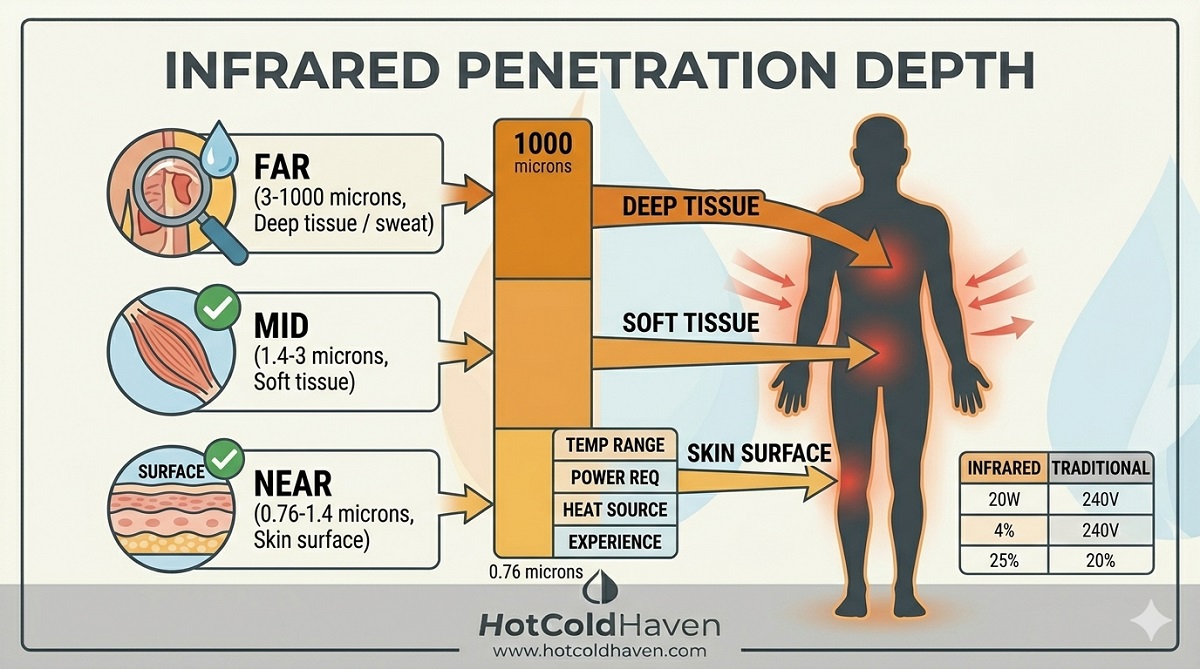
- Near infrared (NIR), ~0.76–1.4 microns — absorbed at the skin’s surface; studied for skin health, collagen and cell repair (photobiomodulation).
- Mid infrared (MIR), ~1.4–3 microns — reaches soft tissue; associated with circulation and easing stiffness.
- Far infrared (FIR), ~3–1000 microns — penetrates deepest; drives the deep warmth and sweating most people associate with infrared saunas.
Far infrared: simpler and gentler
One wavelength band, one heater technology (usually carbon or ceramic panels). The result is lower cost, gentler heat, and fewer things to go wrong — a great default, especially for relaxation and heat sensitivity.
Full spectrum: broader, pricier
Adds near- and mid-infrared, typically via separate LED or halogen emitters alongside the far-infrared panels. That broader range is the appeal — but it costs more and the near-infrared emitter can feel noticeably hotter and more localized.
A cautious word on benefits
Near-infrared/photobiomodulation research is real but still developing, and many sauna “detox” claims outrun the evidence. Treat band-specific benefit lists as plausible, not proven, and prioritize a unit that delivers verified output over one with the longest marketing list. This is educational, not medical advice.
FAQ
What’s the difference between full spectrum and far infrared saunas?
A far infrared sauna emits only far-infrared wavelengths (deep, gentle warmth) using one heater type. A full spectrum sauna adds near- and mid-infrared as well, using extra emitters — a broader range, at a higher price.
Is full spectrum worth the extra cost?
Only if the near/mid emitters actually deliver meaningful output where you sit. The spec that matters is verified irradiance (mW/cm²) at body distance — some full-spectrum units emit so little near/mid energy at the seat that you’re mostly paying for the label.
What do near, mid and far infrared do?
Roughly: near infrared (~0.76–1.4 microns) is absorbed at the skin (studied for skin and cell health); mid (~1.4–3) reaches soft tissue; far (~3–1000) penetrates deepest and drives the sweating and deep warmth. Many benefit claims are still preliminary.
Which should a beginner choose?
Far infrared is simpler, gentler, and cheaper — a solid default. Consider full spectrum if near-infrared skin/recovery effects matter to you and the unit publishes real irradiance figures.
Sources
- The Sauna Place — Full spectrum vs far infrared (irradiance at body distance). saunaplace.com
- Altered States Wellness — Infrared wavelength bands & penetration depths. alteredstateswellness.com
- Nordica Sauna — Full-spectrum vs far-infrared tech & cost. nordicasauna.com
Educational only. Codes and conditions vary — confirm locally and consult a licensed professional.