Cold Plunge for Beginners: How to Start Safely
The first plunge feels dramatic, but a sensible start makes cold therapy safe and sustainable. Here’s exactly how to begin.
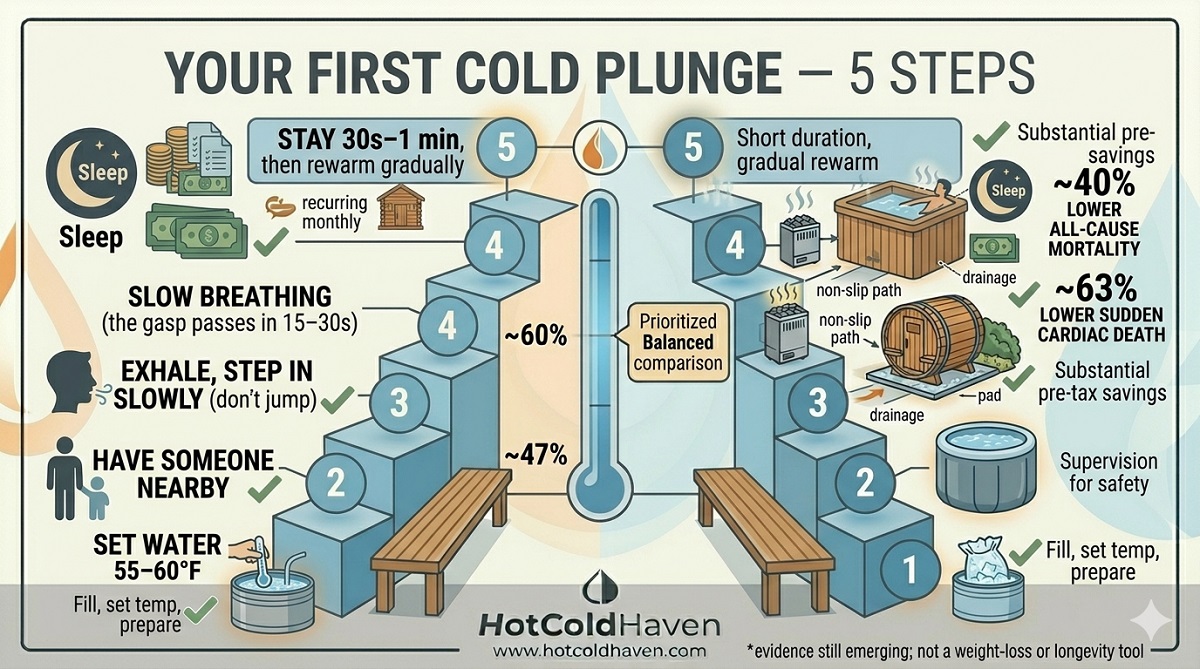
Your first session, step by step
- Set the water around 55–60°F (see temperature). It’ll still feel intense.
- Have someone nearby the first few times.
- Exhale, then step in slowly — don’t jump.
- Control your breathing: slow nasal inhales, long exhales. The gasp reflex passes in 15–30 seconds.
- Stay 30 seconds to a minute, then get out and rewarm naturally.
Progress gradually
Over the following weeks, add time toward 2–3 minutes and/or lower the temperature a few degrees. A useful target is around 11 minutes total per week across a few sessions. Consistency beats intensity — and you’ll find the cold far more manageable within a couple of weeks.
What to expect
An initial cold-shock urge to gasp, a racing feeling, then a settling calm and often a lasting mood and energy lift afterward. That post-plunge glow is a big reason people stick with it.
Beginner mistakes to avoid
- Going too cold too soon — build down gradually.
- Hyperventilating or breath-holding — never do this in water.
- Staying in to “tough it out” — get out when your time’s up or you feel numb.
- Plunging alone at first.
How to breathe (the real skill)
Breathing is what separates a panicked first dip from a controlled one. As you enter, fight the urge to gasp by taking a long, slow exhale, then settle into slow nasal inhales with longer exhales. Keep your shoulders down and your face relaxed. The initial cold-shock reflex — the racing, breath-catching feeling — peaks in the first 15–30 seconds and then fades; if you can stay calm through it, the rest of the dip feels far more manageable. Never hold your breath or hyperventilate to “prepare.”
Your first two weeks
Treat the first fortnight as skill-building, not endurance. Aim for short, regular dips — a few times that week at 55–60°F for under a minute — and add 15–30 seconds or drop a degree or two only as it starts to feel routine. Most people are surprised how quickly the cold becomes tolerable. Consistency now builds the tolerance that makes the benefits sustainable.
FAQ
How do I start cold plunging as a beginner?
Start warmer and shorter than you think: around 55–60°F for just 30 seconds to a minute, focusing on slow, calm breathing. Build temperature and time gradually over weeks. Never plunge alone at first.
How cold should a beginner cold plunge be?
Around 55–60°F (13–15°C) to start — it still feels intense. Lower the temperature gradually as you adapt; there’s no need to jump into ice-cold water on day one.
How long should a beginner stay in?
30 seconds to one minute is plenty to begin. The goal early on is controlling your breathing and your reaction to the cold, not enduring a long time.
What should I not do when starting cold plunging?
Don’t hyperventilate or hold your breath, don’t jump into very cold water unacclimated, don’t plunge alone at first, and don’t stay in trying to ‘tough it out.’ Build up slowly and safely.
Sources
- Huberman Lab — starting cold exposure: begin warmer/shorter, build gradually, never alone. hubermanlab.com
- UF Health — cold-water immersion risks & cold-shock response. ufhealthjax.org
Educational only. Codes and conditions vary — confirm locally and consult a licensed professional.