Are Infrared Saunas Worth It? An Honest Look
Infrared saunas are pitched as a gentler, lower-cost, easier-to-install path to sauna benefits. Before you spend a few thousand dollars, here’s an honest look at what they deliver, what they cost, and who they suit.
The benefits — with an honest caveat
Saunas have an unusually strong research base, but here’s the nuance most sellers skip: the headline studies are on traditional Finnish saunas, where frequent use is associated with substantially lower cardiovascular and all-cause mortality (see sauna benefits). Infrared saunas heat you at a gentler 120–150°F and have a smaller, still-developing evidence base. What’s well-supported for infrared specifically: a comfortable deep sweat, relaxation and stress relief, and eased muscle tension and recovery. What’s overstated: “detox” (sweat’s detox role is minimal) and “weight loss” (mostly water you’ll replace). Treat infrared’s benefits as real for comfort and recovery, and promising-but-less-proven for the big health outcomes.
The costs
- Upfront: roughly $1,500–$9,000+ depending on size, build and full-spectrum features (see home sauna cost). Many 1–2 person units plug into a standard outlet, saving on electrical work.
- Running: low — about $5–$15/month with regular use, since infrared draws less power than a 240V traditional heater.
- Space: a cabin needs a permanent footprint; a small-space or two-person model can fit tighter rooms.
Home vs. studio: the cost math
An infrared studio session typically runs $40–$60. Use one a couple of times a week and you’re spending $300–$500+ a month; a home cabin’s upfront cost is recovered within a year or two of that, after which sessions cost pennies of electricity — and you’ll use it more because it’s steps away. For frequent users, owning beats paying per visit.
Infrared vs. traditional — which is “worth it”?
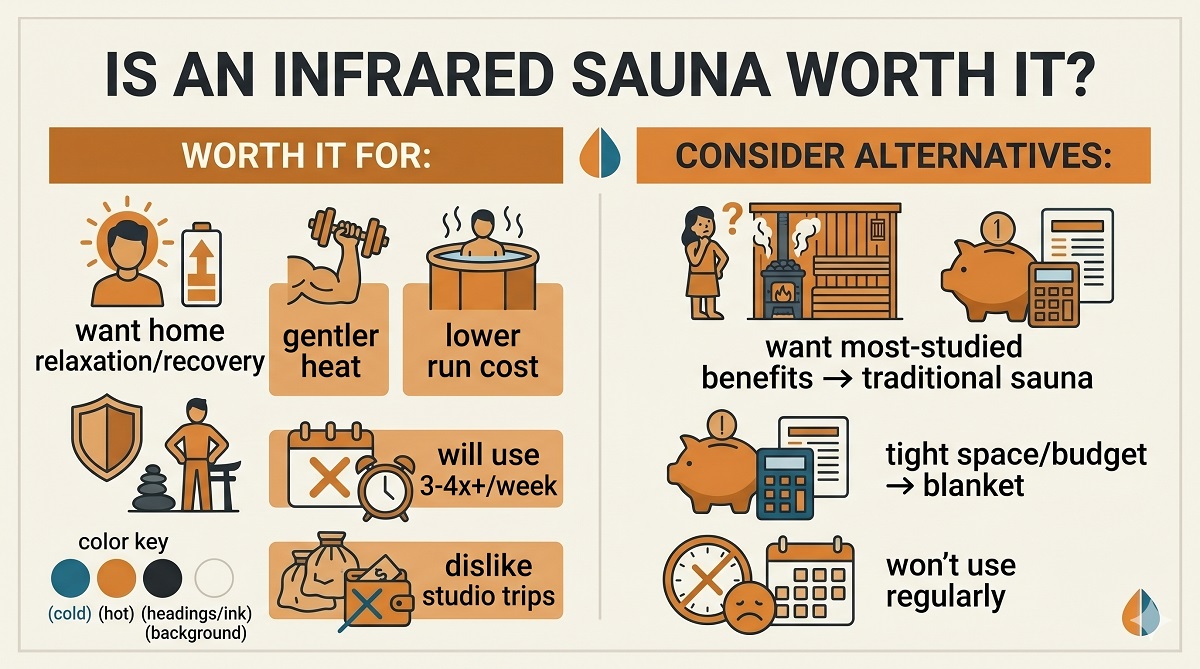
If gentler heat, lower running cost and plug-in simplicity appeal, infrared is worth it. If you want the most-studied benefits and the classic high-heat, löyly ritual, a traditional sauna is the better value for those goals. Neither is universally better — it depends on what you’re buying it for.
Who it’s worth it for
Worth it for people who want comfortable heat and recovery at home, will use it several times a week, and prefer infrared’s gentler, lower-cost profile. Consider alternatives if you want the strongest evidence (traditional sauna), you’re tight on space or budget (start with a blanket to test infrared cheaply), or you won’t use it regularly. A blanket is also a great low-risk way to confirm you like infrared before committing to a cabin.
What the research actually shows
The strongest sauna evidence comes from long-running Finnish studies of traditional saunas, where frequent use (4–7×/week) was associated with roughly 40% lower all-cause mortality and substantially lower cardiovascular and dementia risk versus once weekly — a clear dose-response (see sauna benefits). Infrared saunas have a smaller but growing evidence base, with some studies suggesting benefits for pain, blood pressure and people with cardiovascular conditions, plus widely-reported relaxation and recovery. The honest summary: the headline longevity numbers are traditional-sauna associations (not proof), and infrared’s specific evidence is lighter — so buy infrared for comfort, convenience and recovery, and treat the bigger claims as promising rather than settled.
The full cost picture
| Cost | Infrared sauna |
|---|---|
| Unit | $1,500–$9,000+ |
| Electrical | $0 (many plug-in) to ~$1,000 (hardwired) |
| Running | ~$5–$15/month |
| Maintenance | Low ($50–$150/yr) |
Over five years a mid-range infrared sauna often totals less than a couple of years of studio visits — the convenience of having it at home is the real return (full breakdown in home sauna cost).
Infrared sauna vs. blanket vs. studio
| Infrared cabin | Sauna blanket | Studio | |
|---|---|---|---|
| Upfront | $1,500–$9,000+ | $400–$700 | $0 |
| Experience | Sit-up, whole room | Lie down, head out | Full room, travel needed |
| Best for | Frequent, full experience | Budget/small space, testing infrared | Occasional use |
Not sure infrared is for you? A blanket is a low-cost way to find out before committing to a cabin.
How to maximize the value
- Use it regularly — benefits track with frequency, so put it somewhere you’ll actually go.
- Right-size it — don’t overpay for a 4-person cabin you’ll use solo (see 2-person and small-space options).
- Consider HSA/FSA — saunas are often eligible with a Letter of Medical Necessity.
Who should be cautious
Sauna heat is well-tolerated by most people, but check with a doctor first if you have cardiovascular disease, low or unstable blood pressure, or are pregnant, and avoid alcohol before sessions. Start with shorter, cooler sessions and hydrate well. These are sensible precautions, not reasons most people can’t enjoy a sauna.
What to check before you buy
If you decide an infrared sauna is worth it, a few specifics separate a good purchase from a regret:
- Heater type & spectrum: far-infrared covers most needs; full-spectrum adds near- and mid-infrared at a premium (see full-spectrum vs far-infrared).
- EMF: ask for the manufacturer’s low-EMF heater data (our EMF guide gives honest context).
- Wood & build: non-toxic, low-VOC wood and solid construction.
- Power: confirm whether it plugs into a standard outlet or needs a dedicated circuit.
- Warranty: longer coverage on heaters and electronics signals confidence.
Getting these right up front is the difference between a sauna you use for a decade and one that disappoints in year two.
How often you’d need to use it
The value case depends on frequency. The research that makes saunas look impressive involves regular use — often 4–7 sessions a week — and the cost-per-session math only beats a studio if you go several times weekly. If you’ll realistically use it 3–4+ times a week, a home infrared sauna is easy to justify on both wellness and money grounds. If it’ll be a once-a-fortnight novelty, studio sessions or a cheaper blanket make more sense.
The bottom line
An infrared sauna is worth it if you want comfortable, convenient heat at home and will use it often: running costs are low, the relaxation and recovery benefits are real, and owning beats paying per studio visit for frequent users. It’s less compelling if you specifically want the most-studied benefits — those come from traditional saunas — or if space, budget or likely frequency work against you, in which case a blanket is a smart, low-risk way to test infrared first. Buy it for relaxation, recovery and the convenience of having it steps away, keep expectations honest about detox and weight loss, and it’s a purchase most owners are glad they made.
FAQ
Are infrared saunas worth the money?
For regular users who want relaxation, recovery and gentle heat at home, an infrared sauna is often worth it — it pays back versus studio sessions and is cheaper to run than you’d think. It’s less worth it if you want the most-studied health benefits (those come from traditional saunas) or won’t use it consistently.
Do infrared saunas have proven health benefits?
Most of the strongest sauna research is on traditional Finnish saunas, not infrared. Infrared has a smaller, growing evidence base for relaxation, recovery and comfort, but many “detox” and “weight loss” claims outrun the science.
How much does an infrared sauna cost to buy and run?
Buying runs roughly $1,500–$9,000+ depending on size and quality, and running costs are low — about $5–$15/month with regular use, since infrared draws less power than a traditional heater.
Should I buy an infrared sauna or a blanket?
If you want the full sit-up experience and have space and budget, a cabin. If you want the cheapest, most space-efficient way into infrared heat, a blanket. A blanket is also a low-risk way to test infrared before buying a cabin.
Sources
- Laukkanen et al. (2015), JAMA Internal Medicine — (traditional) sauna use & mortality. doi:10.1001/jamainternmed.2014.8187
- Laukkanen, Laukkanen & Kunutsor (2018), Mayo Clinic Proceedings — sauna health benefits review. review summary
Educational only. Codes and conditions vary — confirm locally and consult a licensed professional.