Inflatable vs Hard Cold Plunge: Which Should You Buy?
Both can deliver a proper cold plunge — the question is how often you’ll use it, where, and for how long. Here’s the comparison.
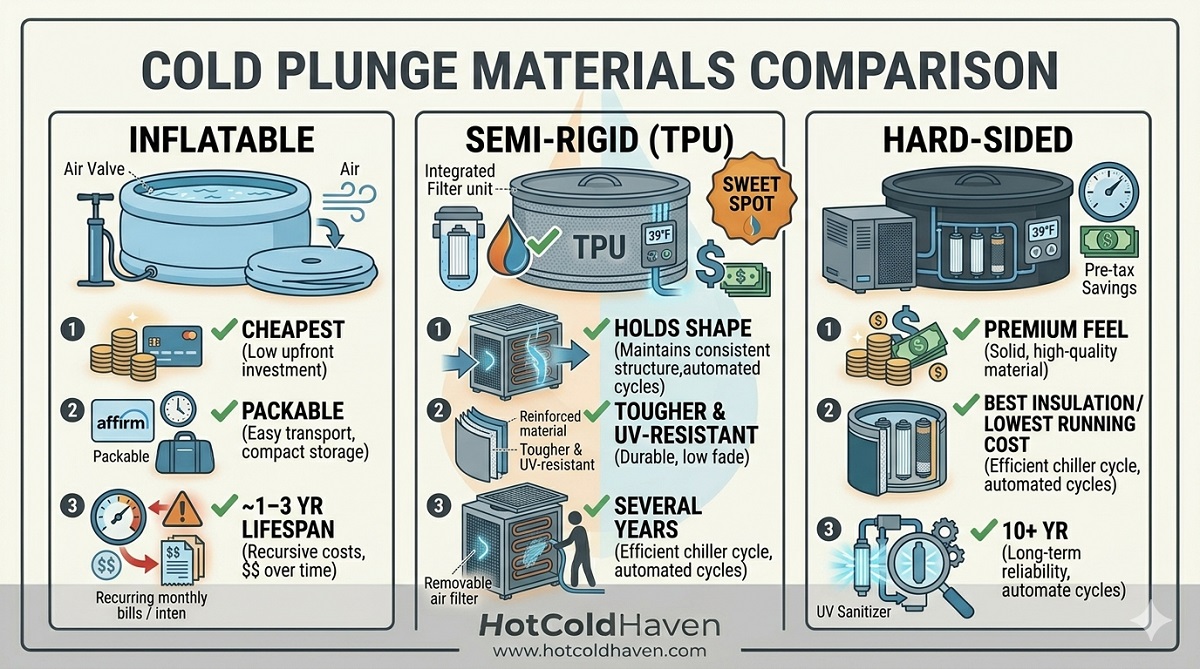
| Inflatable / portable | Hard-sided | |
|---|---|---|
| Price | Lowest entry cost | Higher |
| Insulation | Modest — chiller works harder | Better — lower running cost |
| Durability | Puncture/UV vulnerable | Very durable |
| Portability | Packs away — take it anywhere | Fixed footprint |
| Chiller | Usually compatible via ports | Often integrated |
| Feel | Casual | Premium, spa-like |
| Best for | Starters, renters, travel | Permanent daily setups |
Inflatable / portable
The lowest-cost way into cold therapy, and the only option if you rent, travel, or lack space. Most accept an external chiller, though weaker insulation means it runs more — so a fitted cover and shade matter (see running costs). Expect a less premium feel and more care to avoid punctures.
Hard-sided
Built for a permanent, frequent setup. Better insulation lowers running cost, the build feels sturdy and spa-like, and chilling/filtration are usually integrated. The cost is the price tag and a fixed location that needs a solid, level base (see placement).
The middle ground: semi-rigid (TPU)
Between flimsy inflatables and fixed acrylic tubs sits a growing semi-rigid category, often made from thick TPU (the durable drop-stitch material used in premium paddleboards). These hold their shape better than a basic inflatable, insulate a little better, and resist punctures and UV — while still being movable and far cheaper than acrylic. For many home users they’re the practical sweet spot.
A rough guide to lifespan
- Basic PVC inflatables: often ~1–3 years with regular use — sooner if left in the sun.
- TPU / semi-rigid: typically several years; more puncture- and UV-resistant.
- Hard-sided (acrylic/fiberglass): a decade or more with care.
A fitted, UV-rated cover meaningfully extends the life of any of them.
FAQ
Are inflatable cold plunges any good?
For getting started, yes — they’re inexpensive, portable and packable. The trade-offs are weaker insulation (so a chiller works harder), less durability, and a less premium feel than a hard-sided tub.
Can you use a chiller with an inflatable cold plunge?
Usually yes — most accept an external chiller via inlet/outlet ports or hoses. Because inflatables insulate less well, the chiller runs more in warm conditions, so a fitted cover matters even more.
Are hard cold plunges worth the extra cost?
If you’ll plunge regularly and want it to last, yes. Hard-sided tubs insulate better (lower running cost), feel sturdier, and tend to integrate filtration and chilling more cleanly — at a higher price and with a fixed footprint.
Which lasts longer, inflatable or hard-sided?
Hard-sided tubs are far more durable and better suited to permanent outdoor placement. Inflatables are more vulnerable to punctures and UV wear but win on portability and storage.
Sources
- Sun Home Saunas — Cold plunge insulation, covers & running cost factors. sunhomesaunas.com
- Peak Primal Wellness — Insulation & cover impact on chiller load. peakprimalwellness.com
Educational only. Codes and conditions vary — confirm locally and consult a licensed professional.